Author: Ziyu Zuo

  • Brief 1 Kitchen Sink~·~ Week 2-3

    Brief 1 Kitchen Sink~·~ Week 2-3

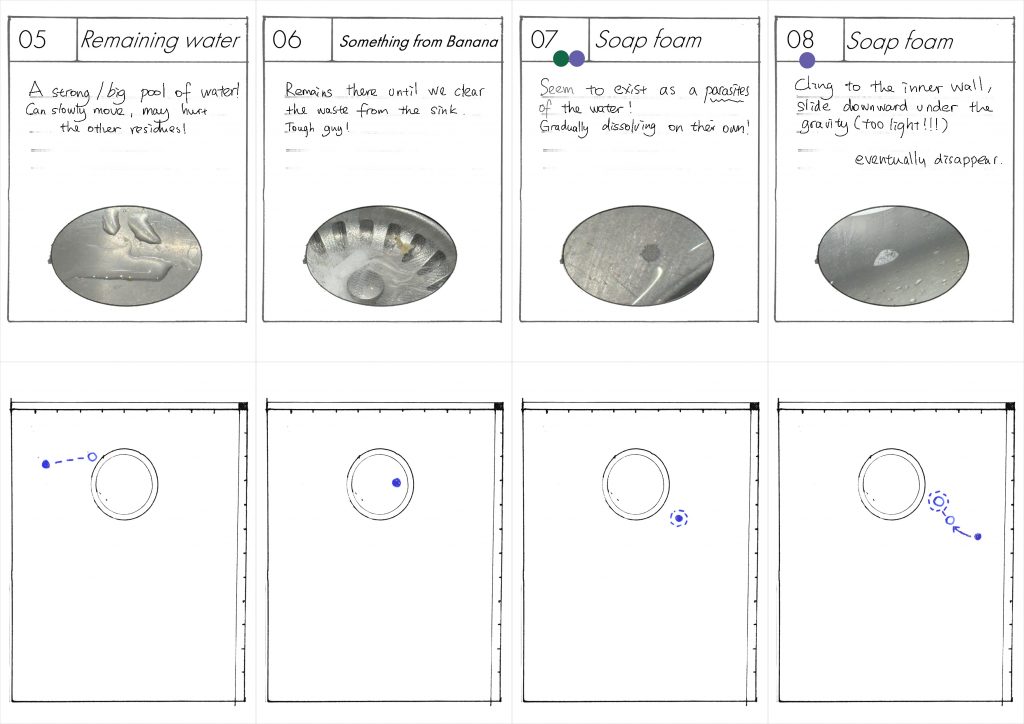
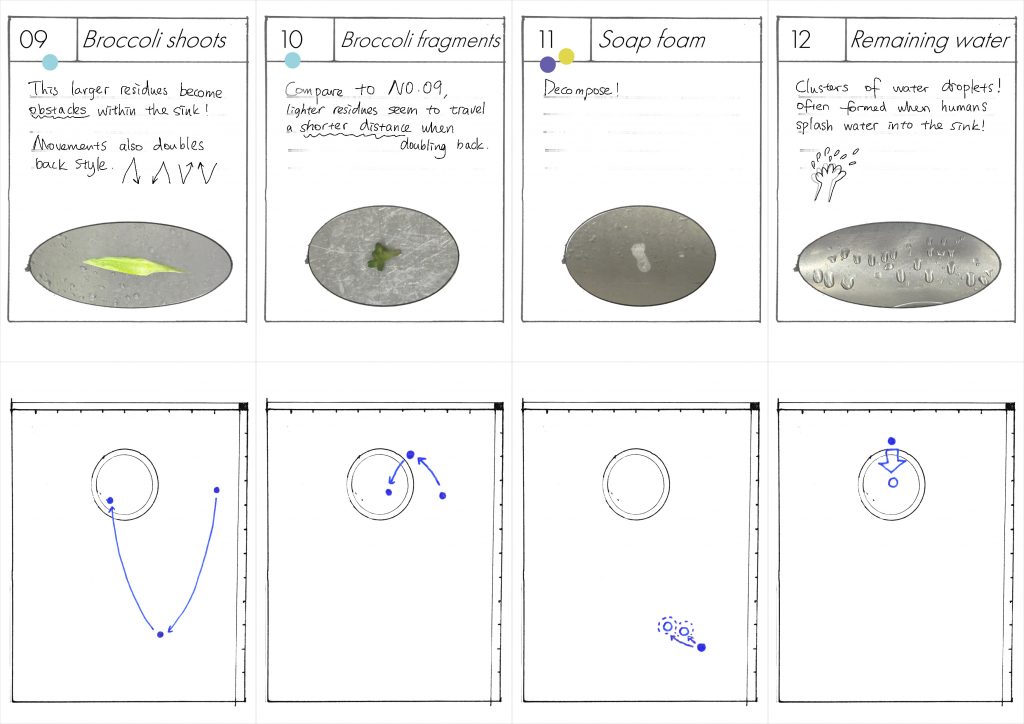
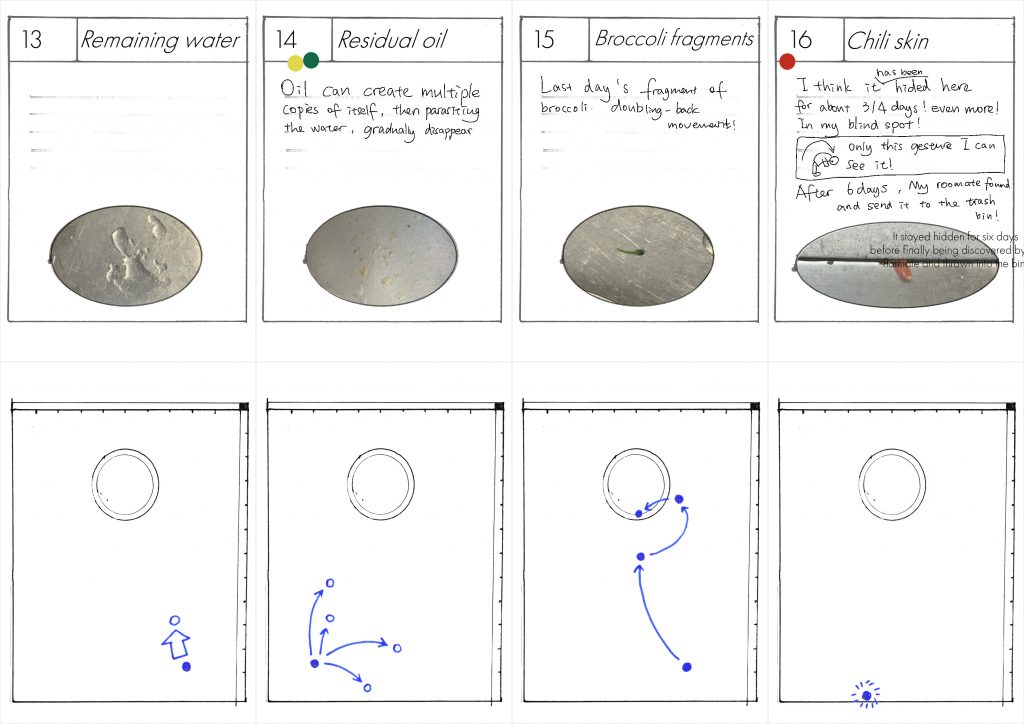
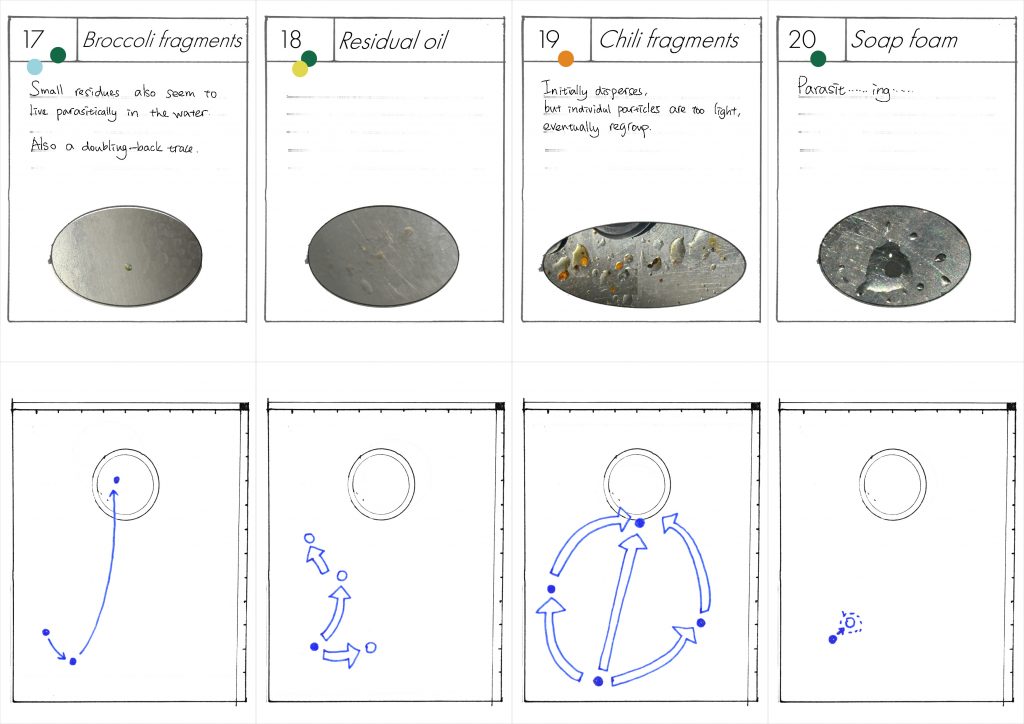
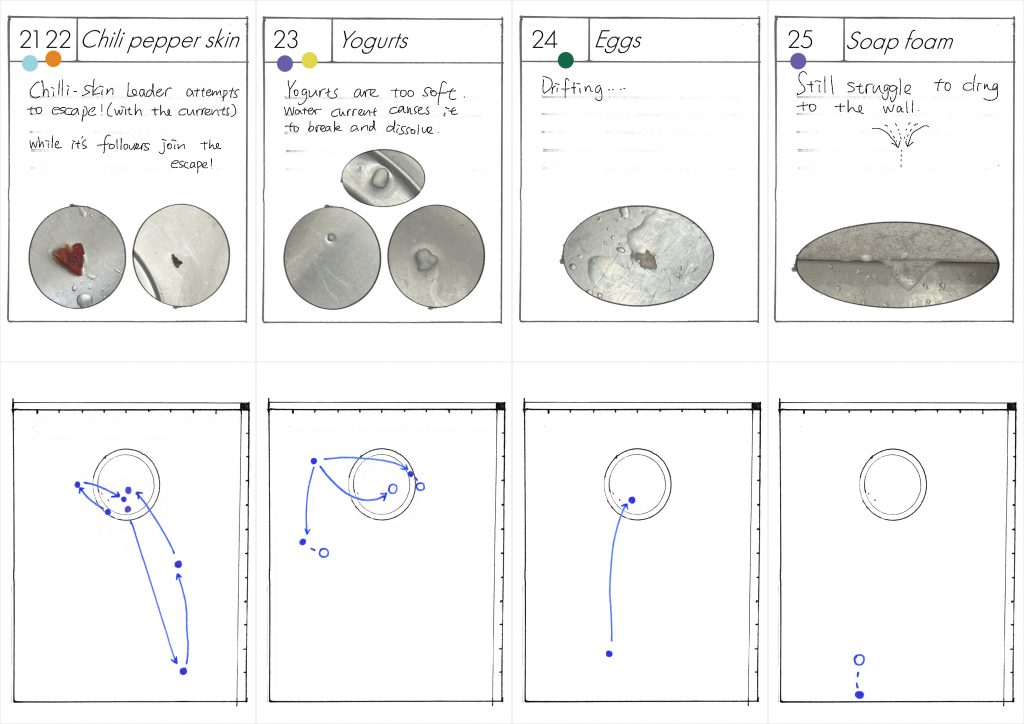
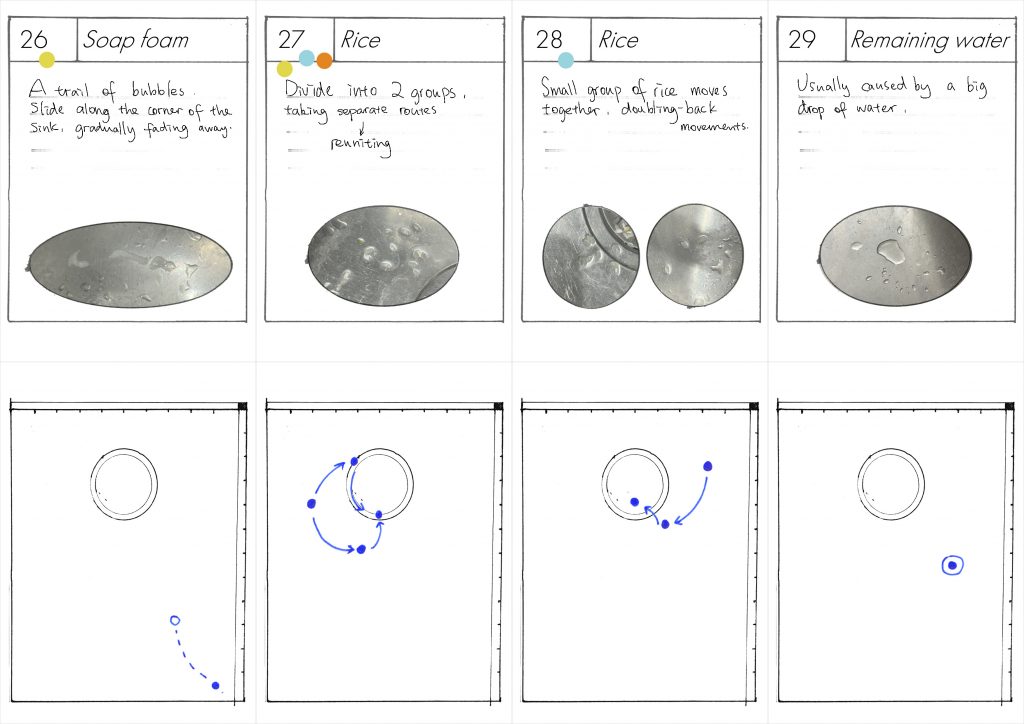
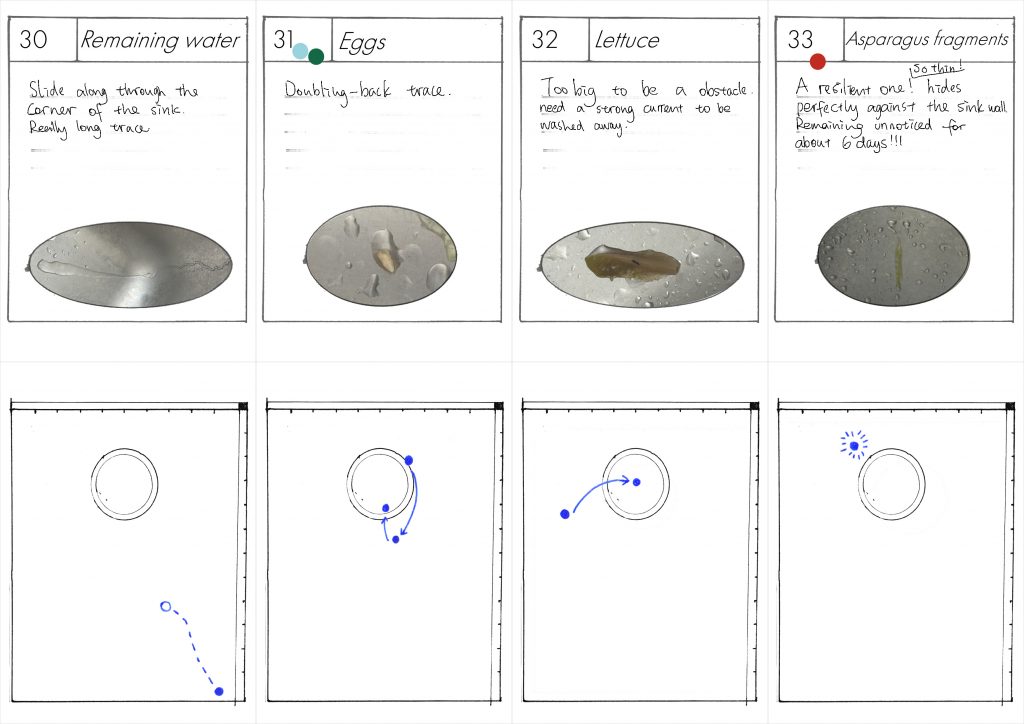
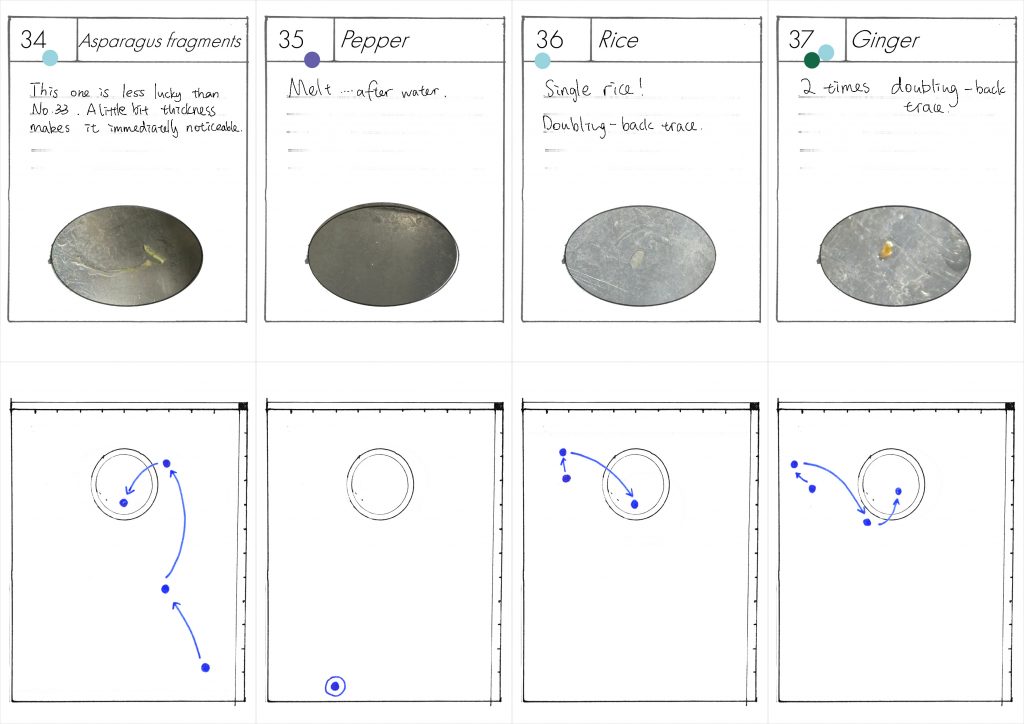
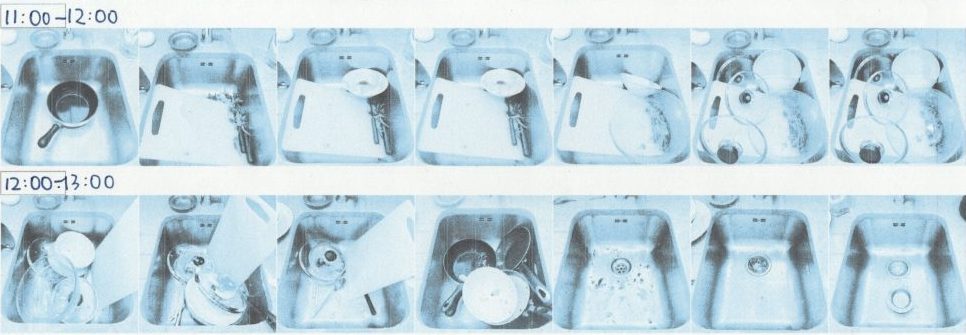
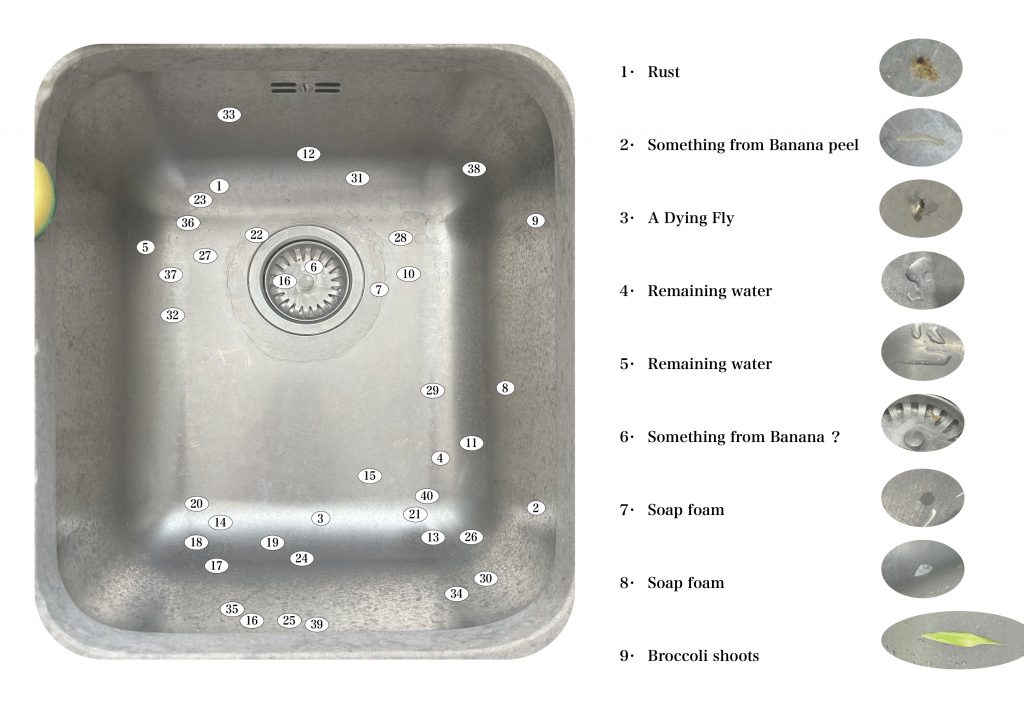
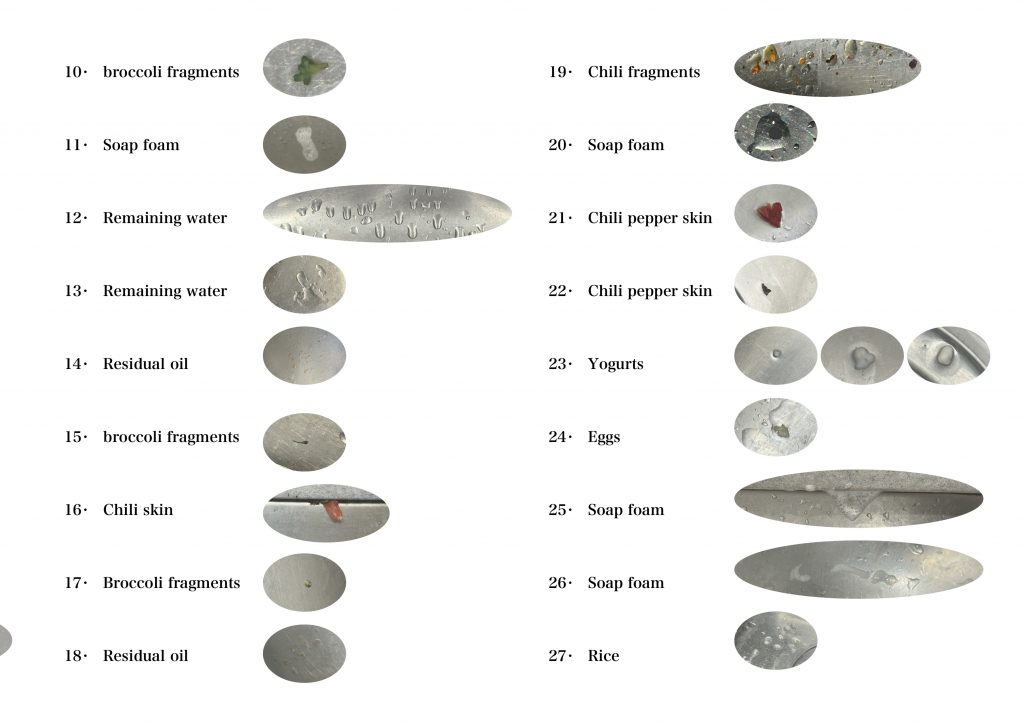
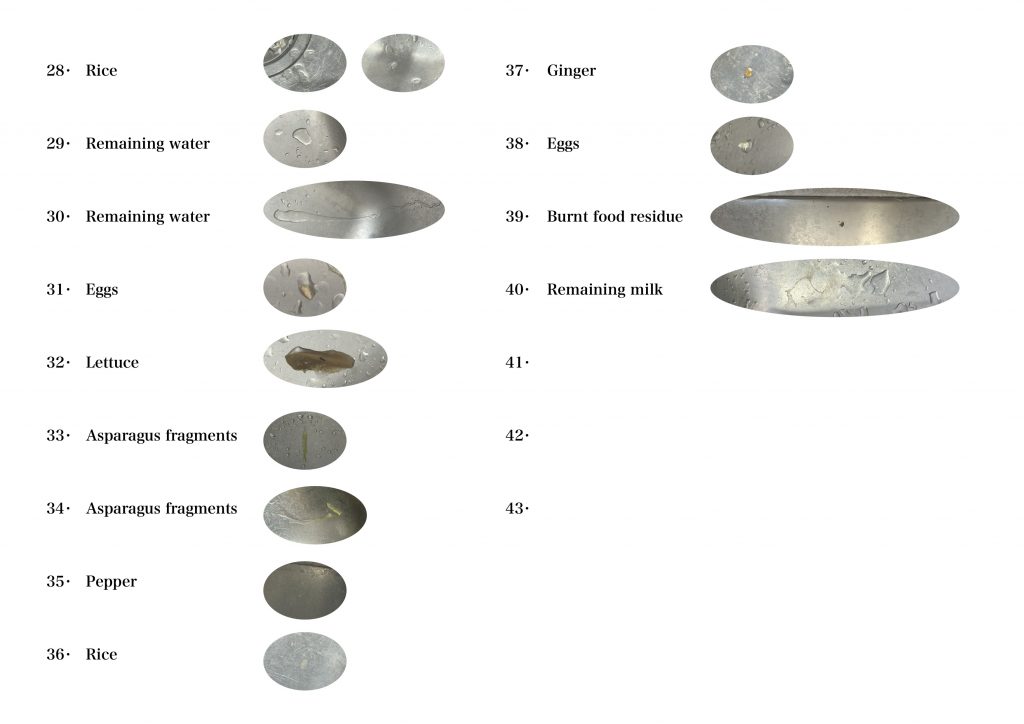
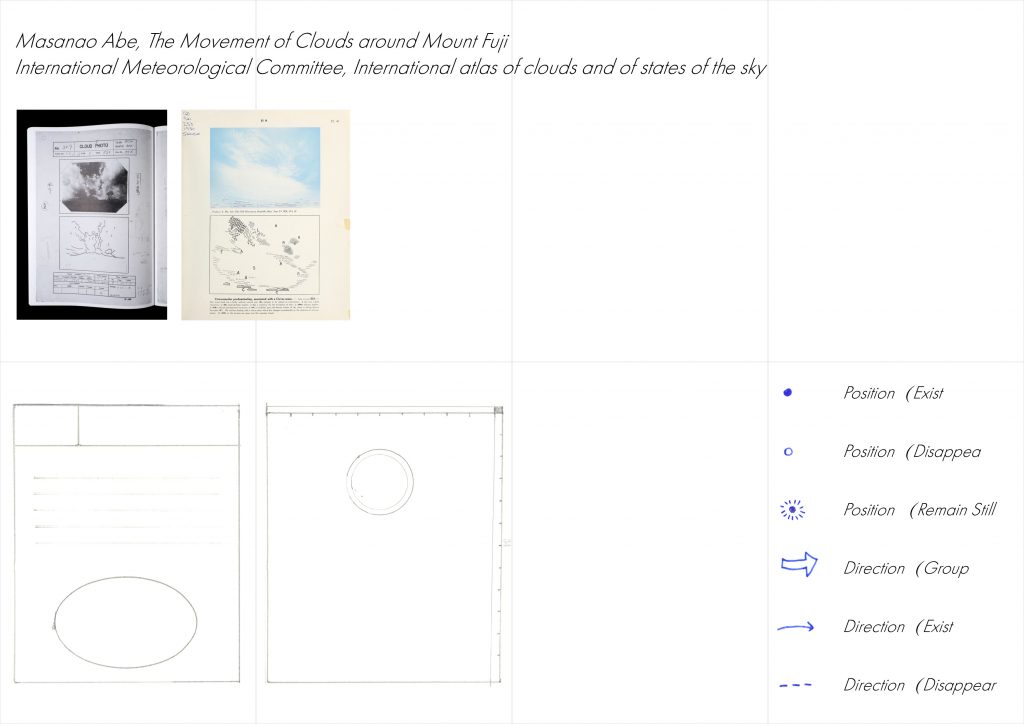
    In the second week, I decided to focus on Method 2 from the first week. I observed more residues and created more detailed and precise records for each of them. I also drew inspiration from the documentation methods used in Masando Abe’s The Movement of Clouds around Mount Fuji and the International Meteorological Committee’s International Atlas of Clouds and of States of the Sky.
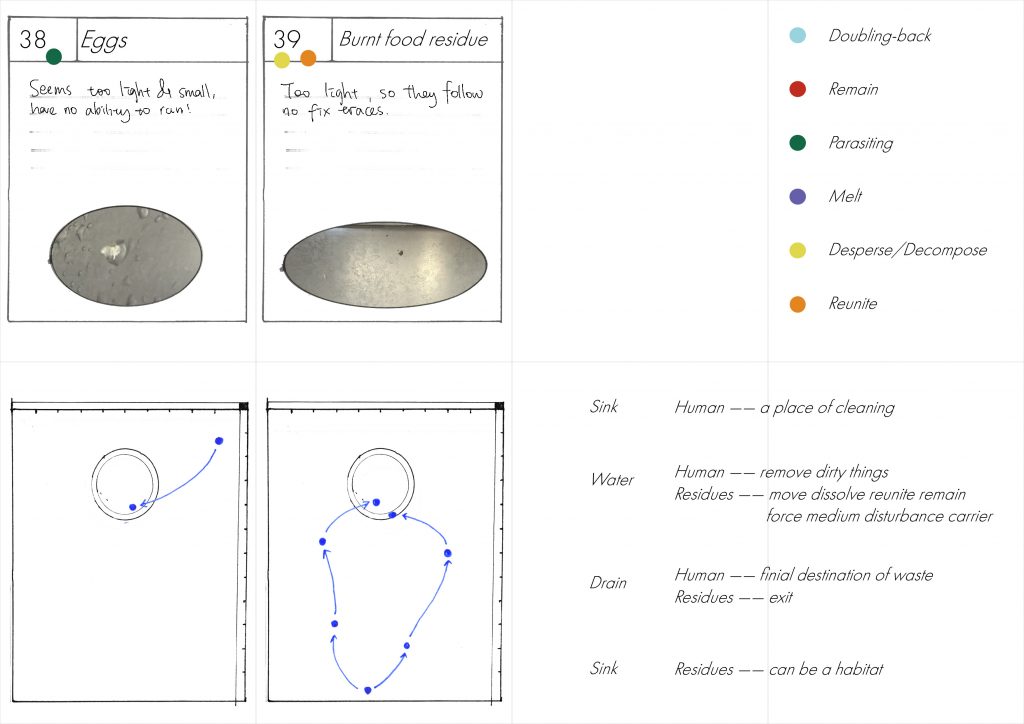
    Documents update in week 2

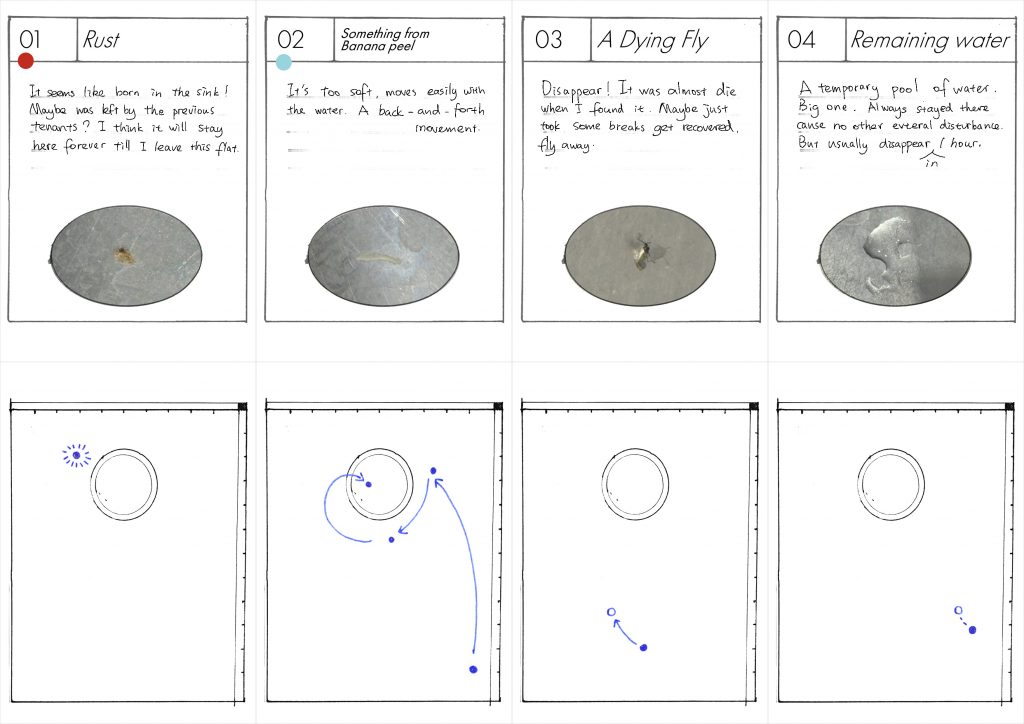
    After completing these records, I noticed that different types of residues surprisingly shared some similar patterns of behaviour.I used different coloured dots to record and categorise the residues.

    At this point, I also started to question why these behaviours were happening. What was causing them? Was it human intervention, the structure of the sink, the movement of water, or the properties of the residues themselves?

    These questions gradually shifted my approach from simply observing and documenting the residues to thinking about the sink as a small world of its own. I began to consider how different elements within this space interacted with one another, and how I could recreate these relationships through my design.

    In this sense, my method gradually moved towards worldbuilding and staging.

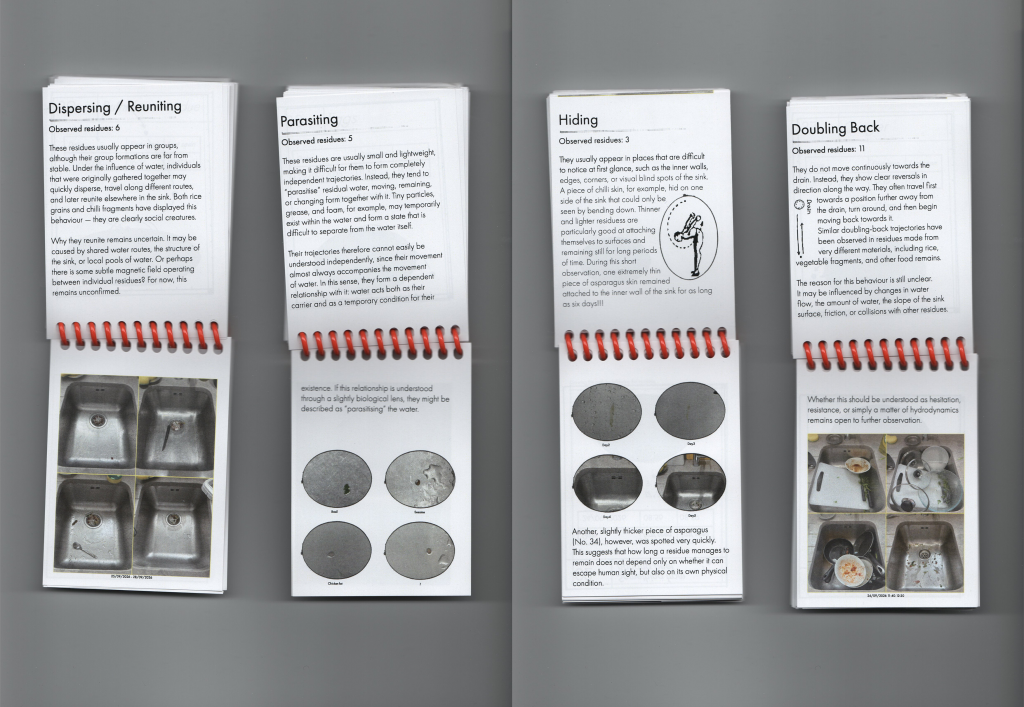
    In the third week, I started thinking about how to show these findings to the audience. Initially, I wanted to create an interactive website, but I realised I wouldn’t be able to finish it within the limited time. So I turned to a more traditional way of presenting archival material — print. In the end, I decided to make a zine.

    I also continued to think about how to describe the movements of these residues. Should I use more concise and precise language rather than conversational descriptions?

    More importantly, I started thinking about how readers would engage with the zine. I wanted them to experience the process of discovering, recording, archiving and grouping the residues, and eventually shifting their perspective of observation.

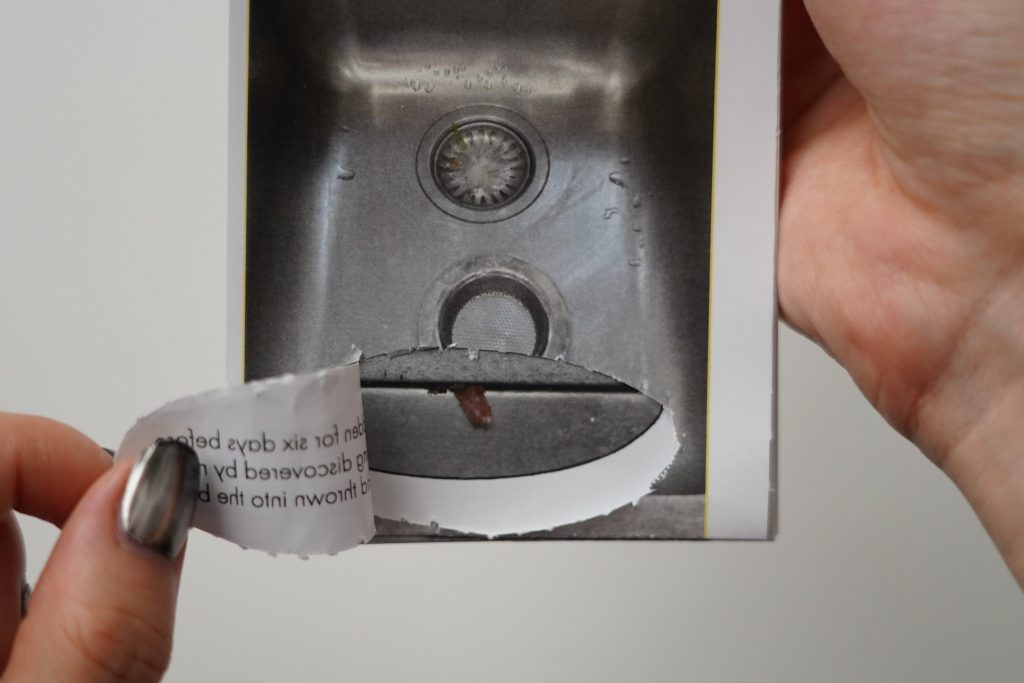
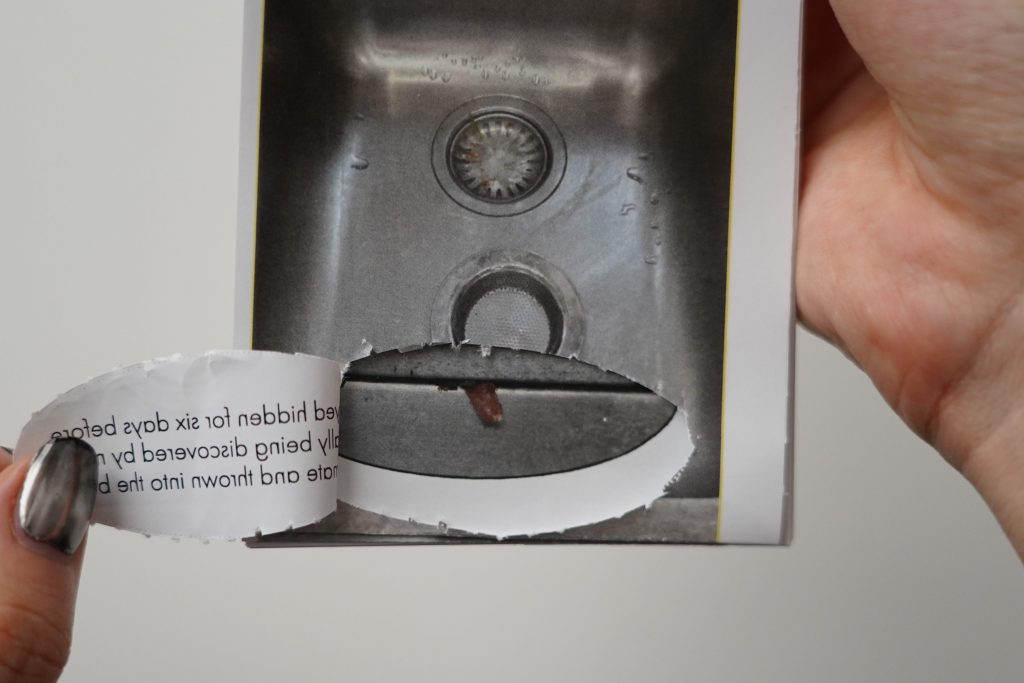
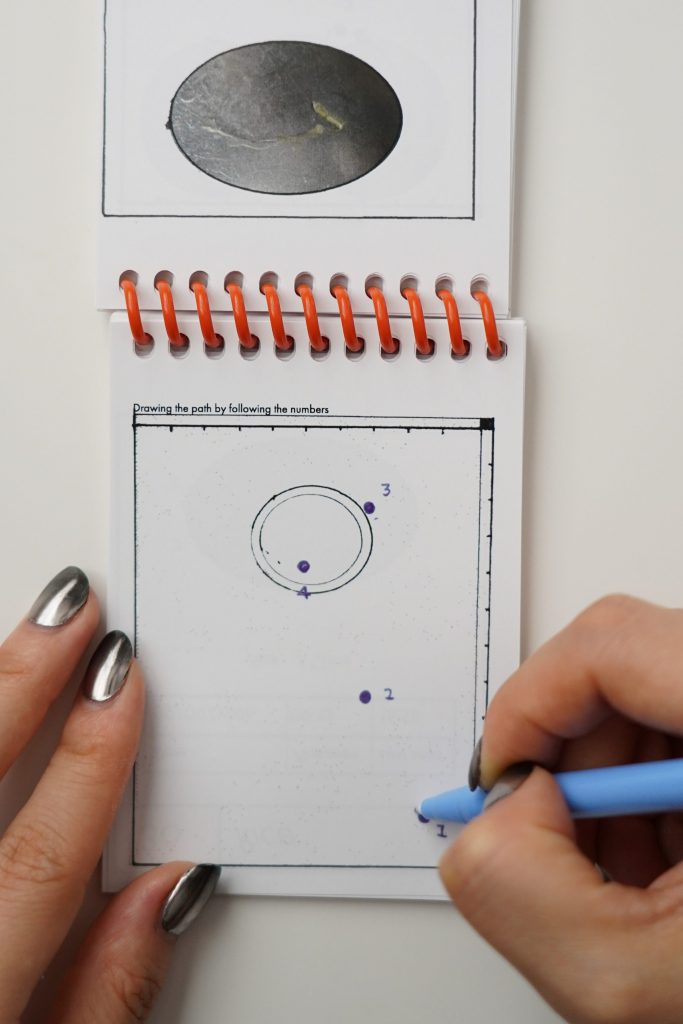
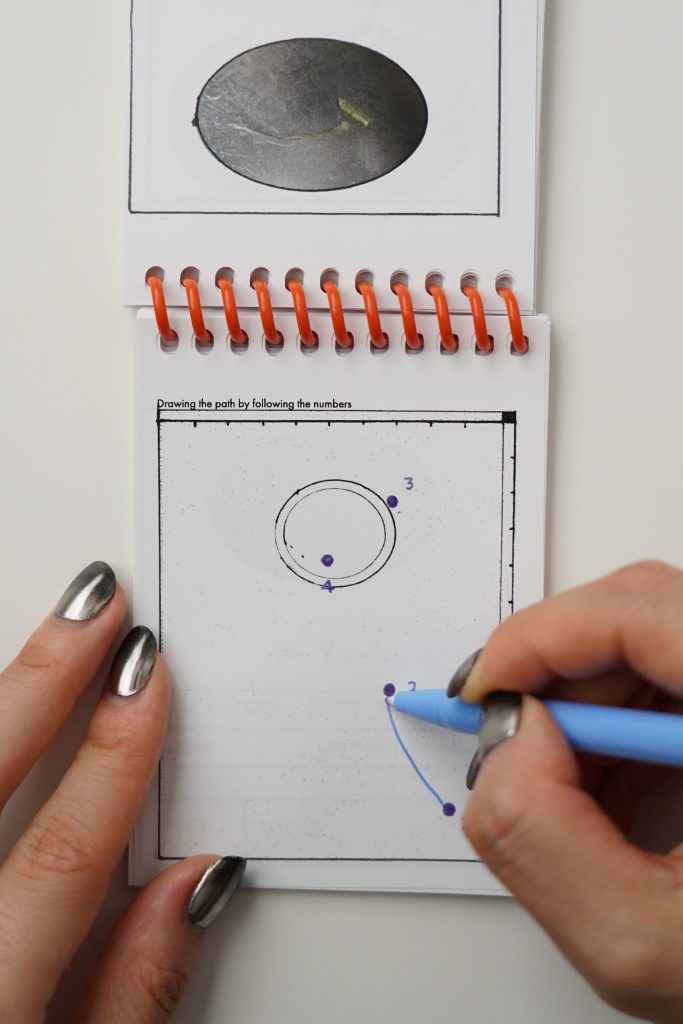
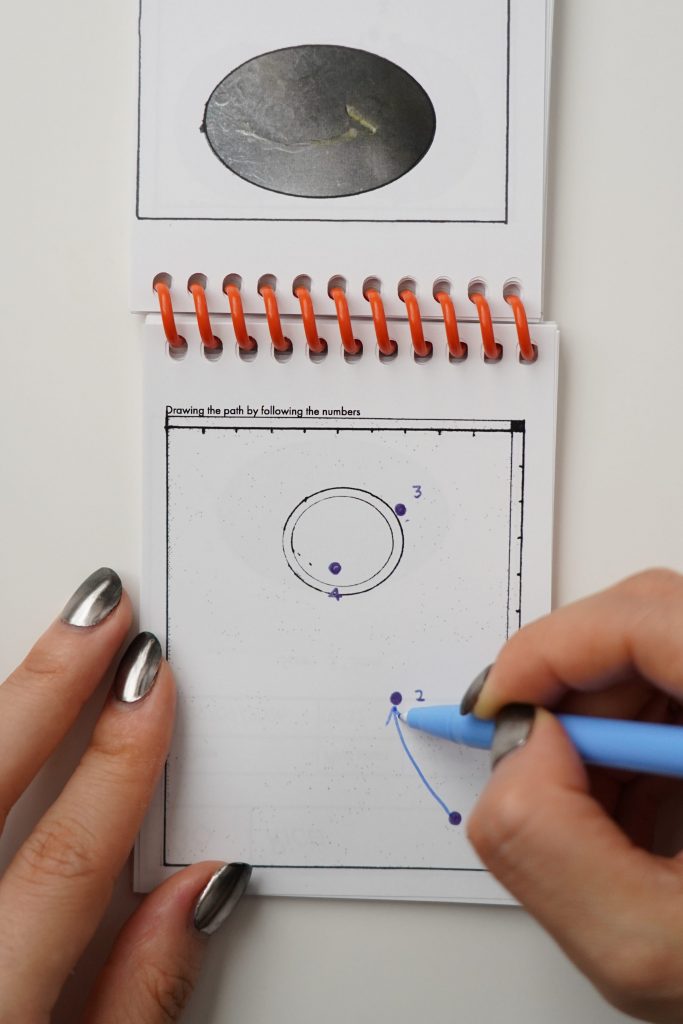
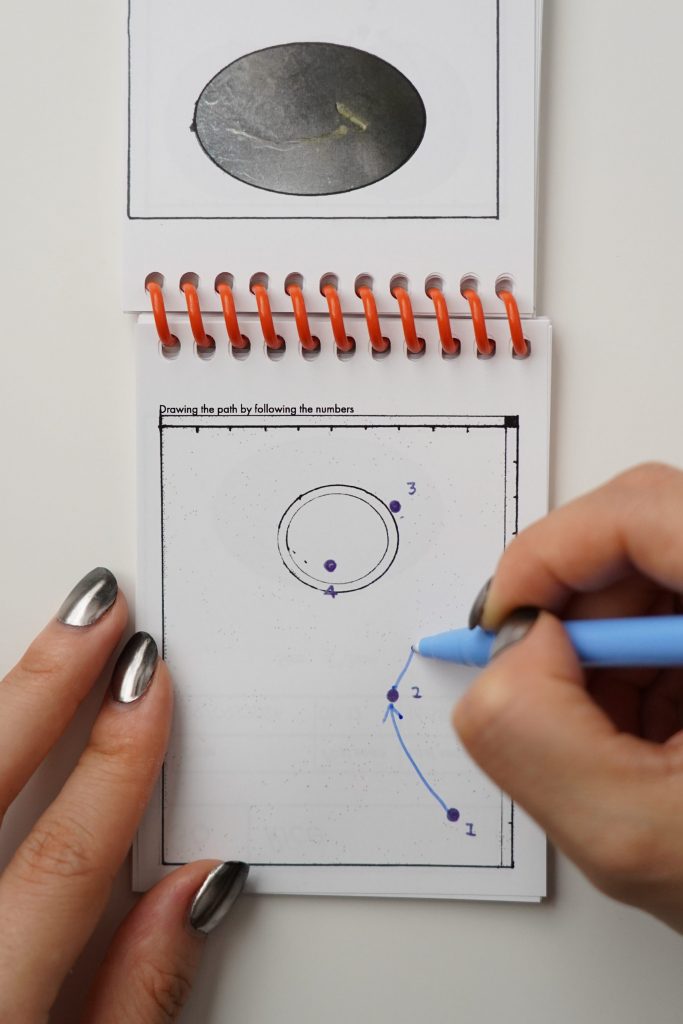
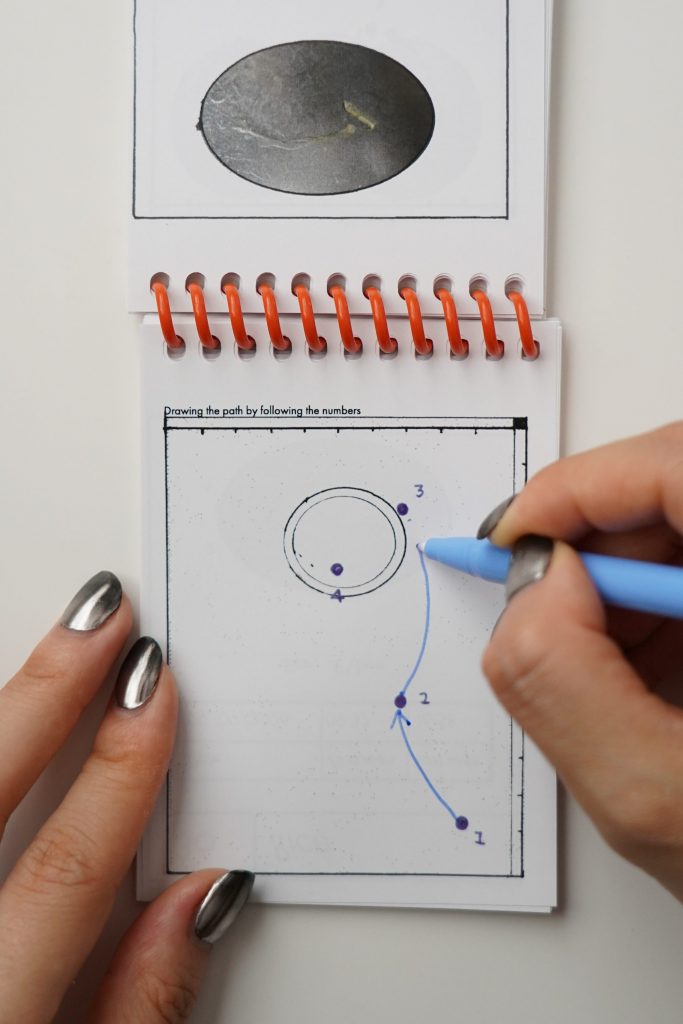
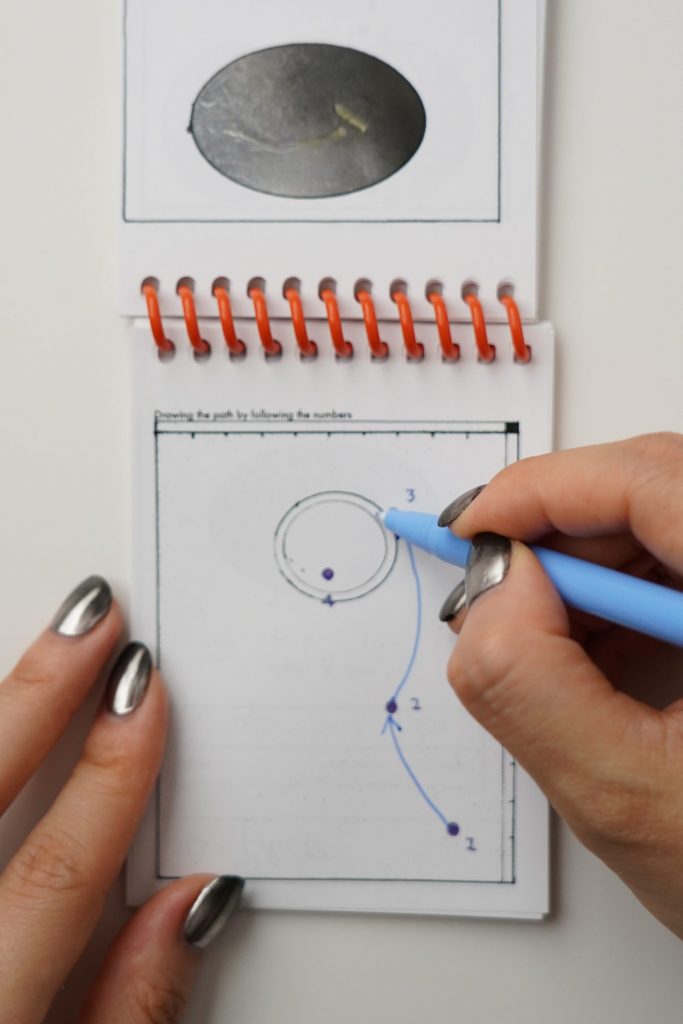
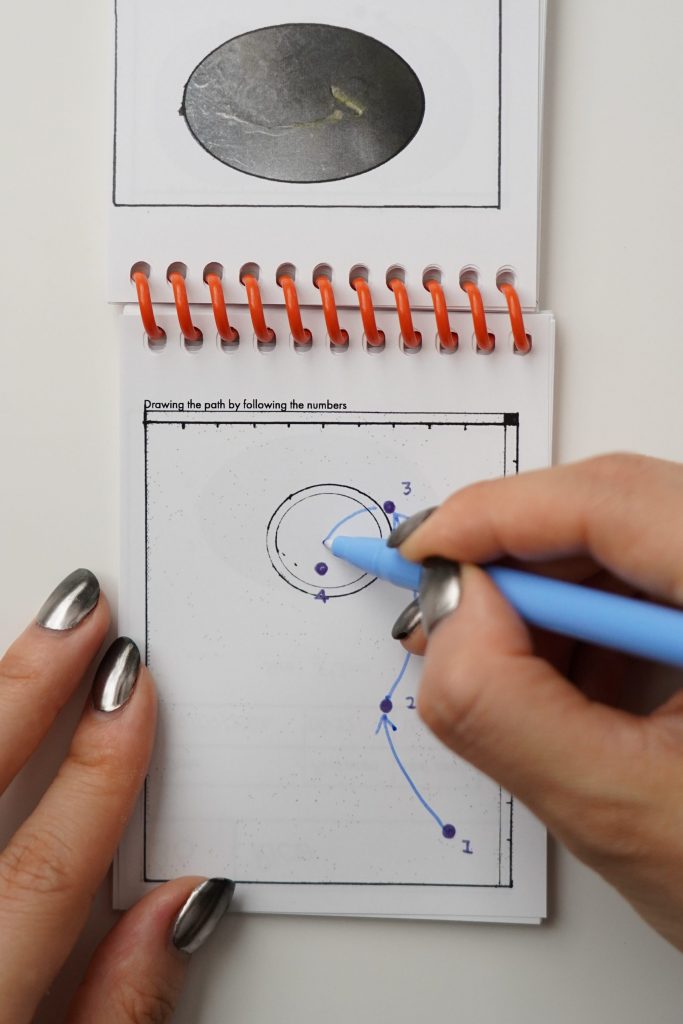
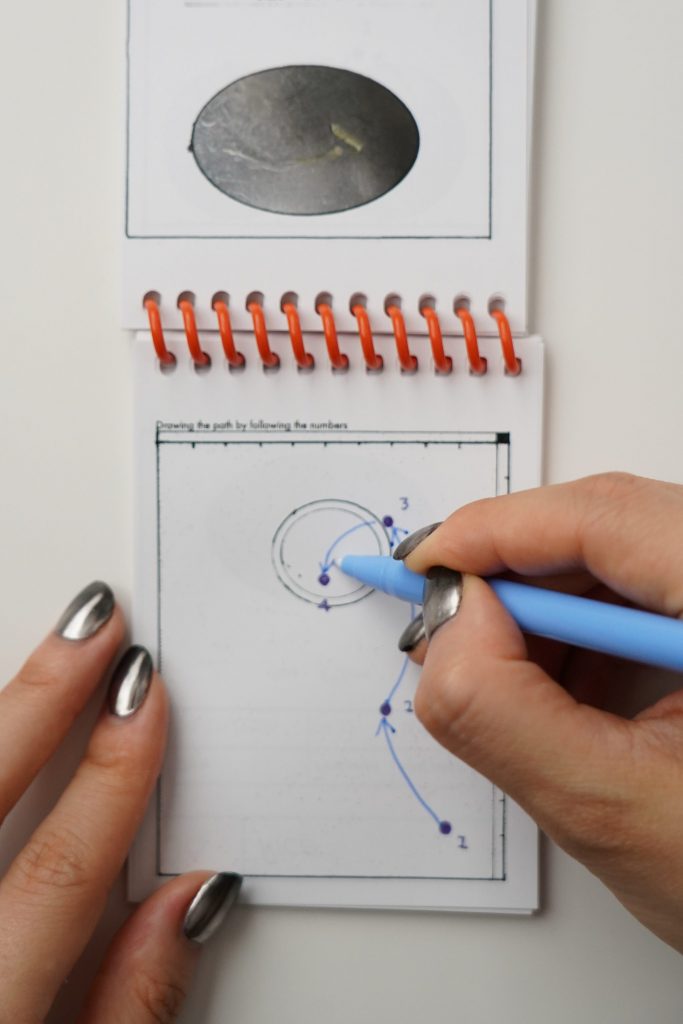
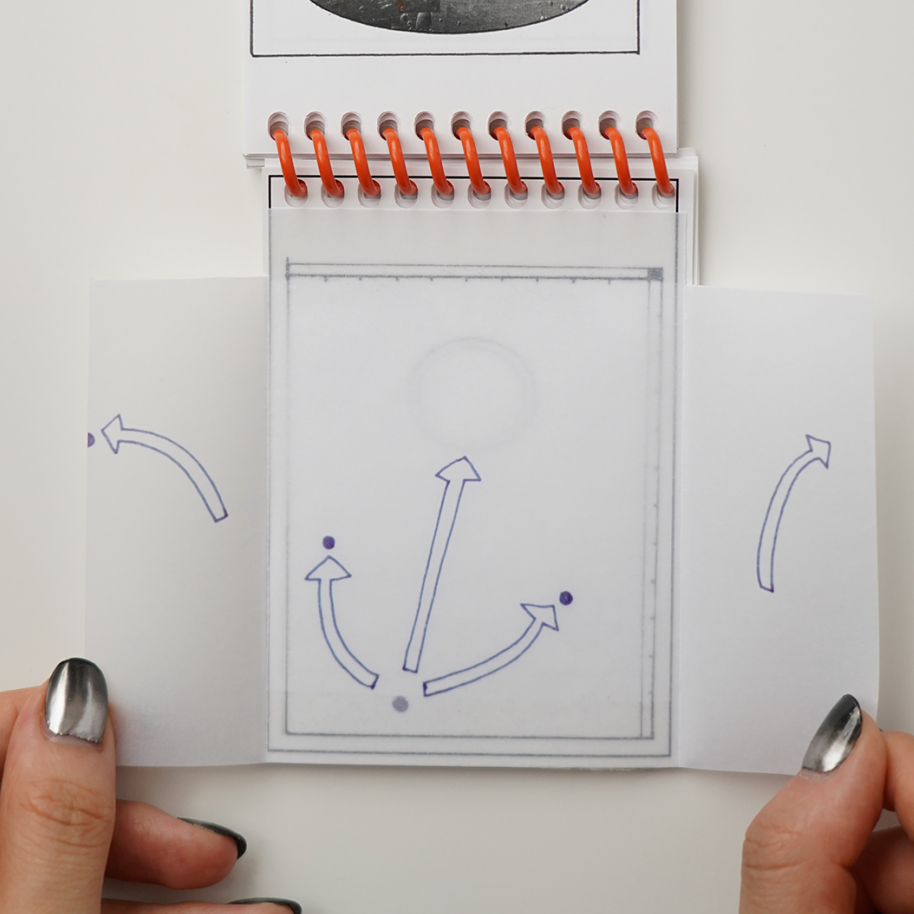
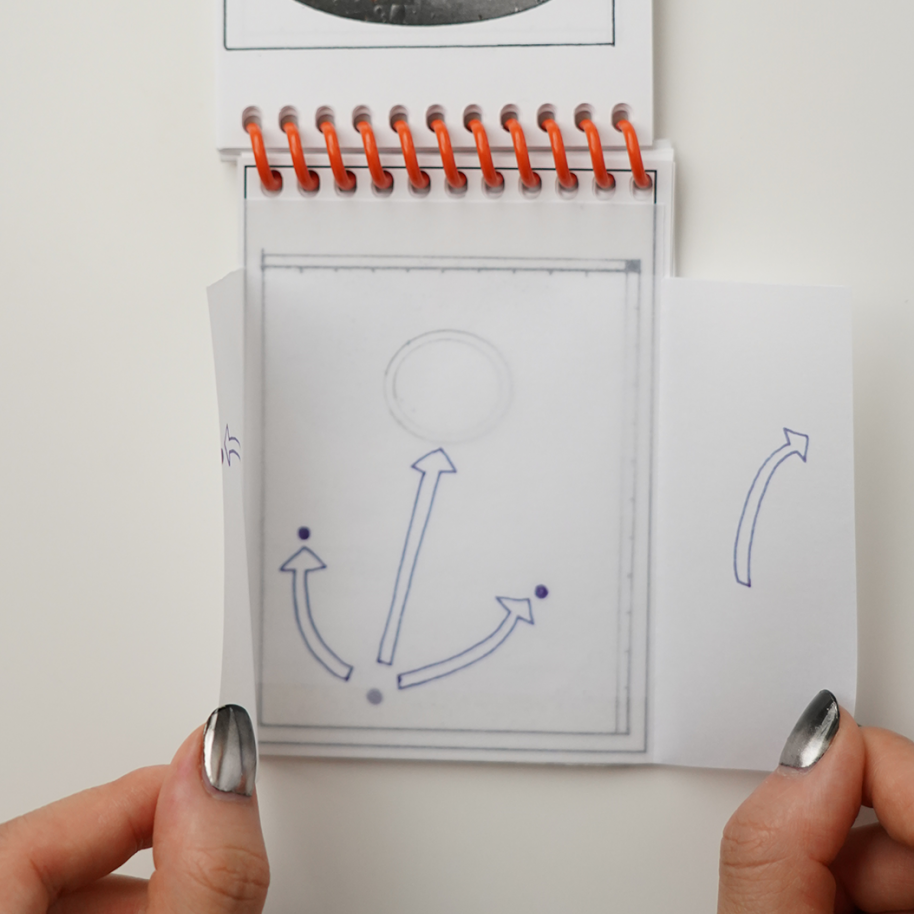
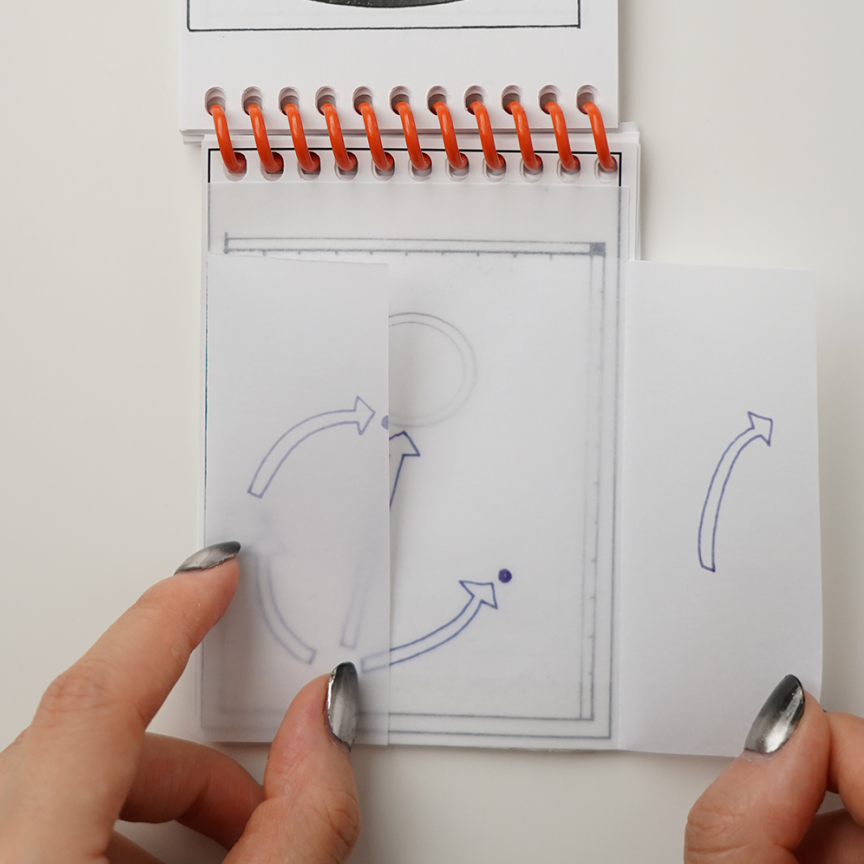
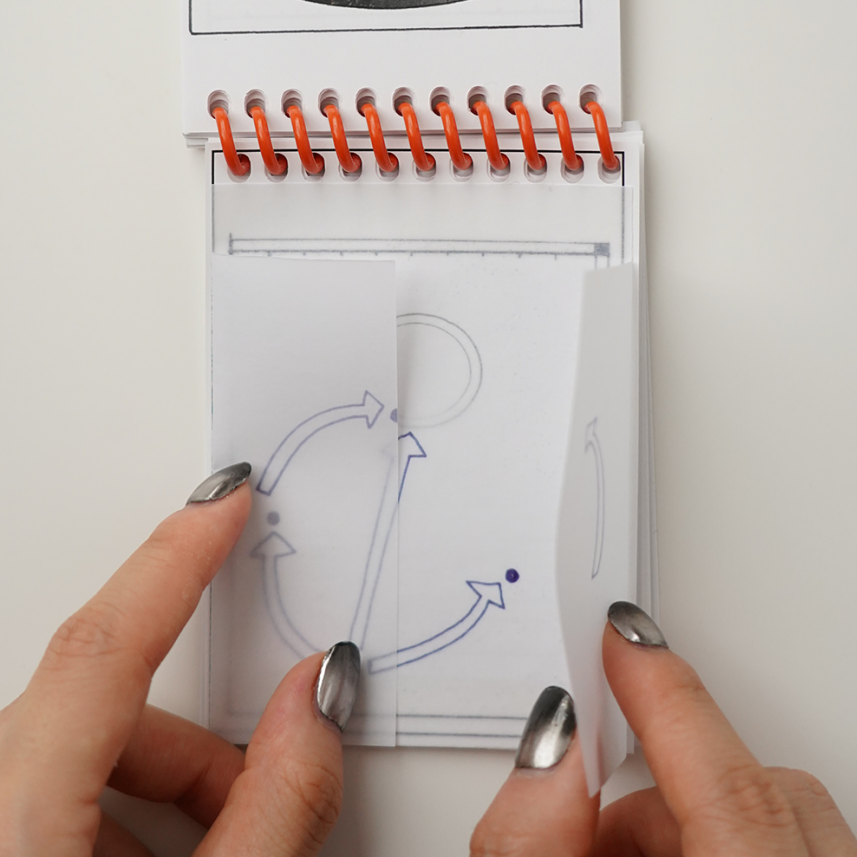
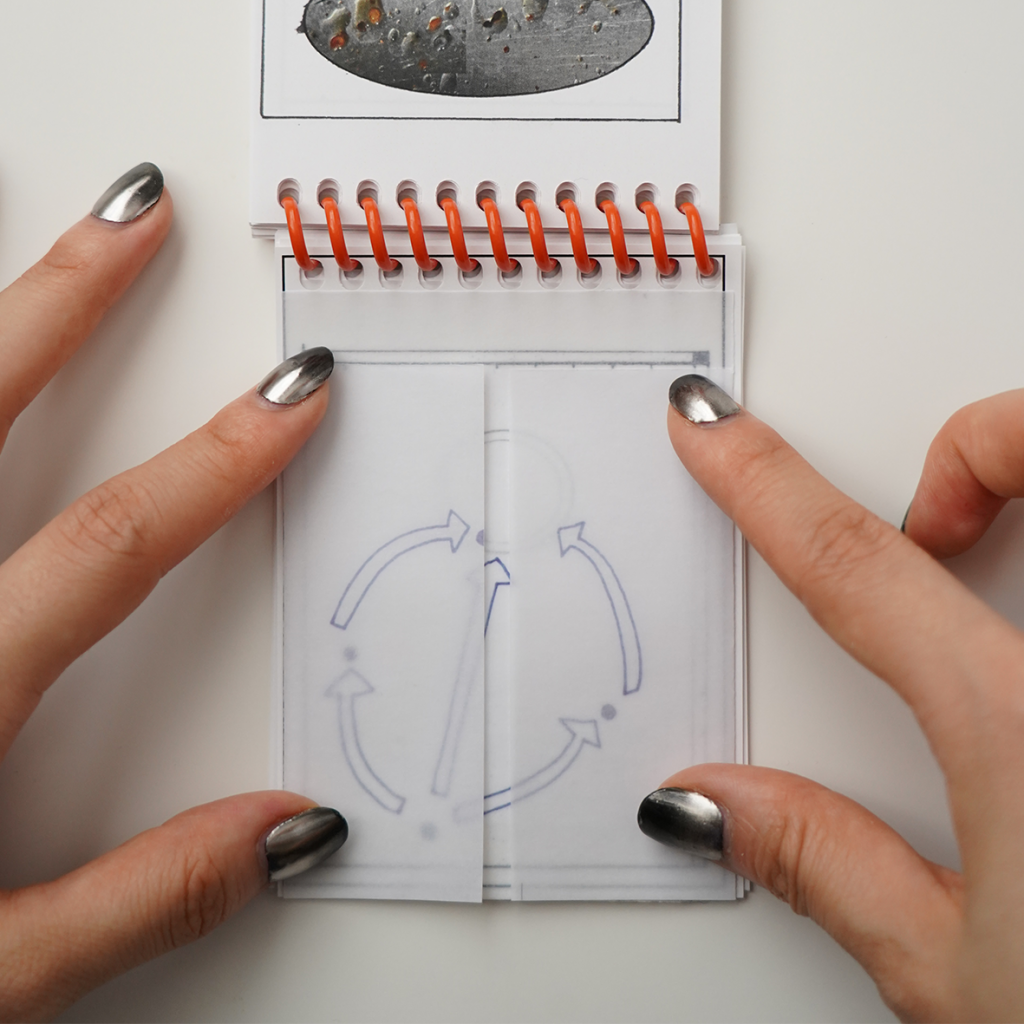
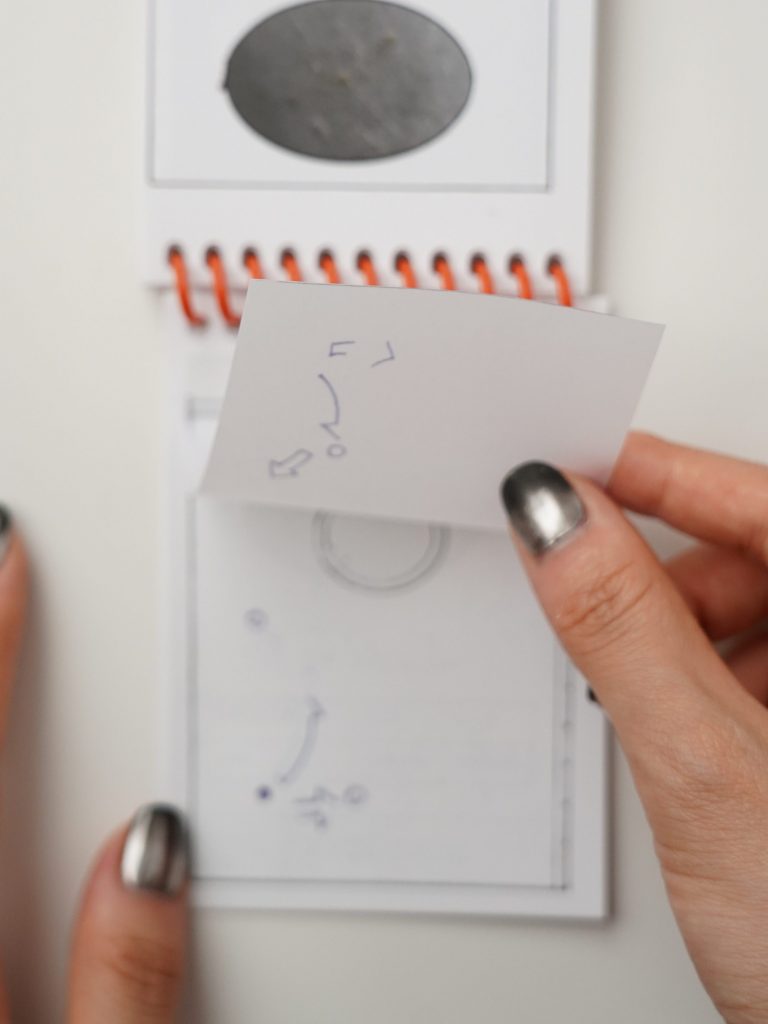
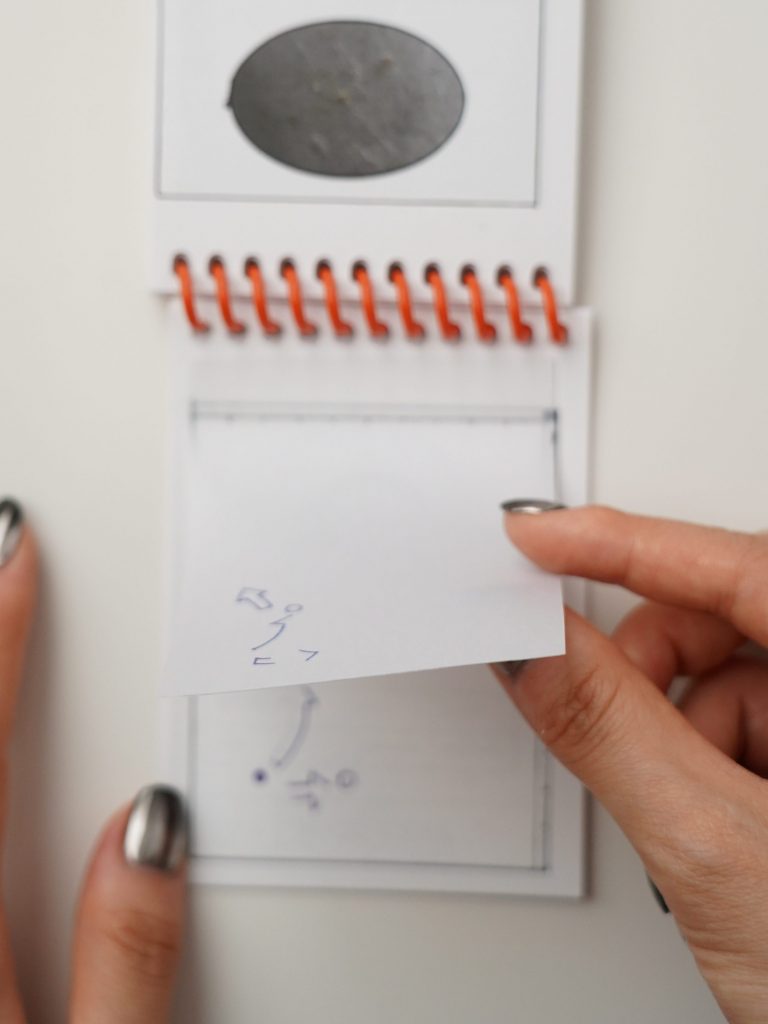
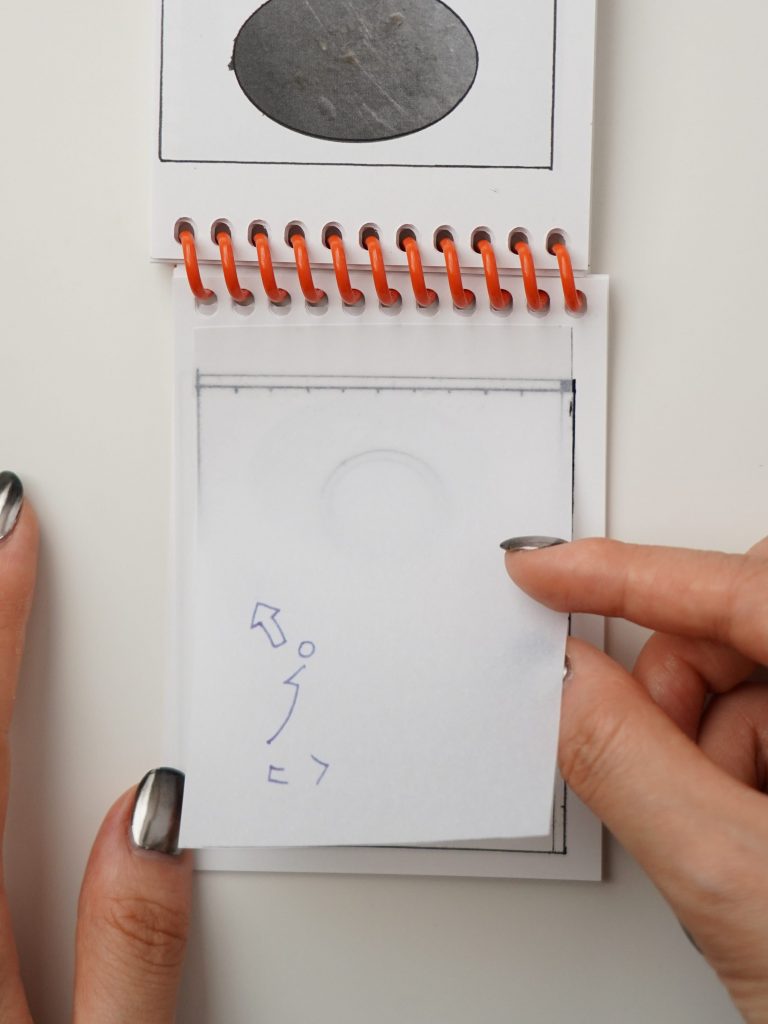
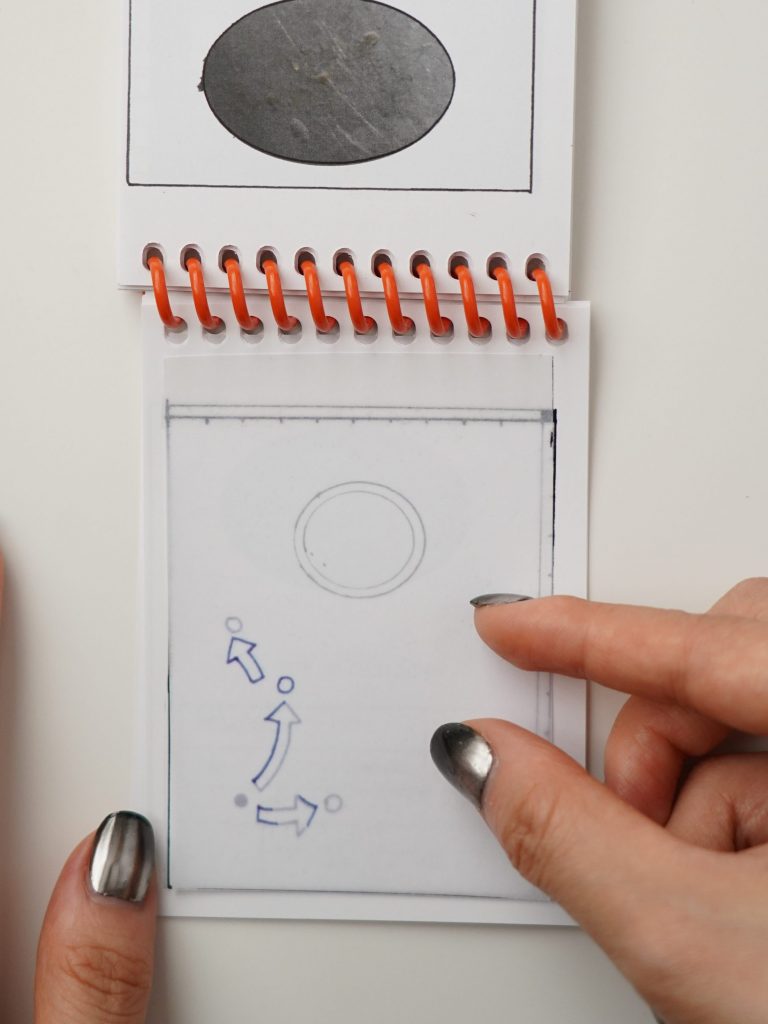
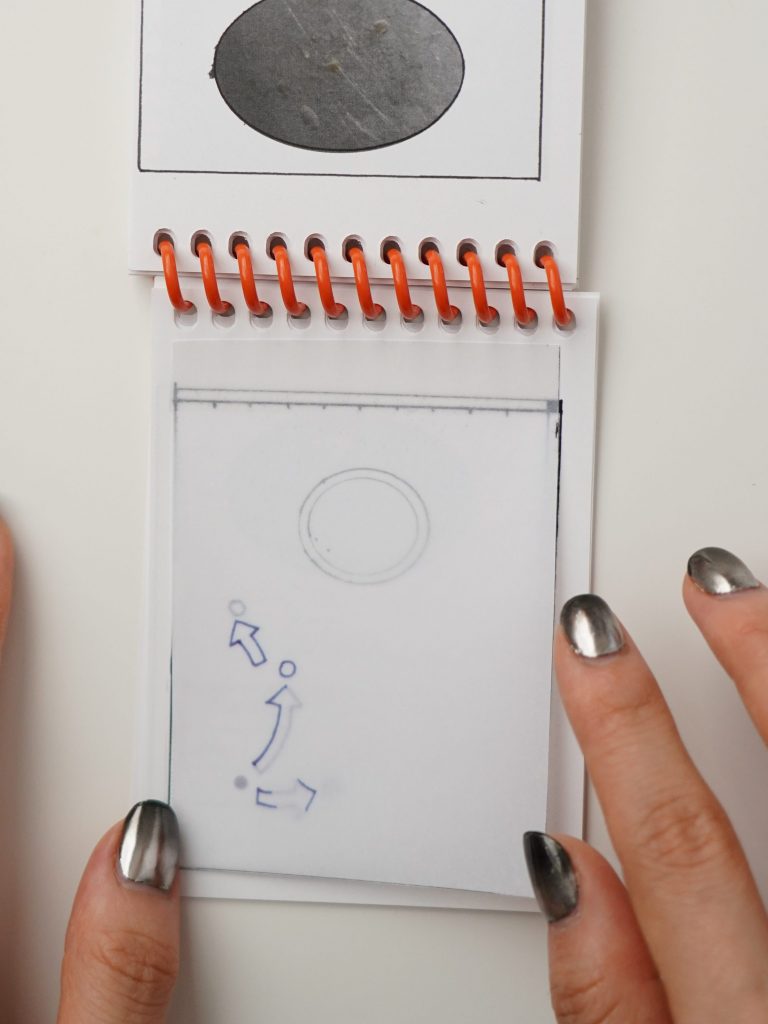
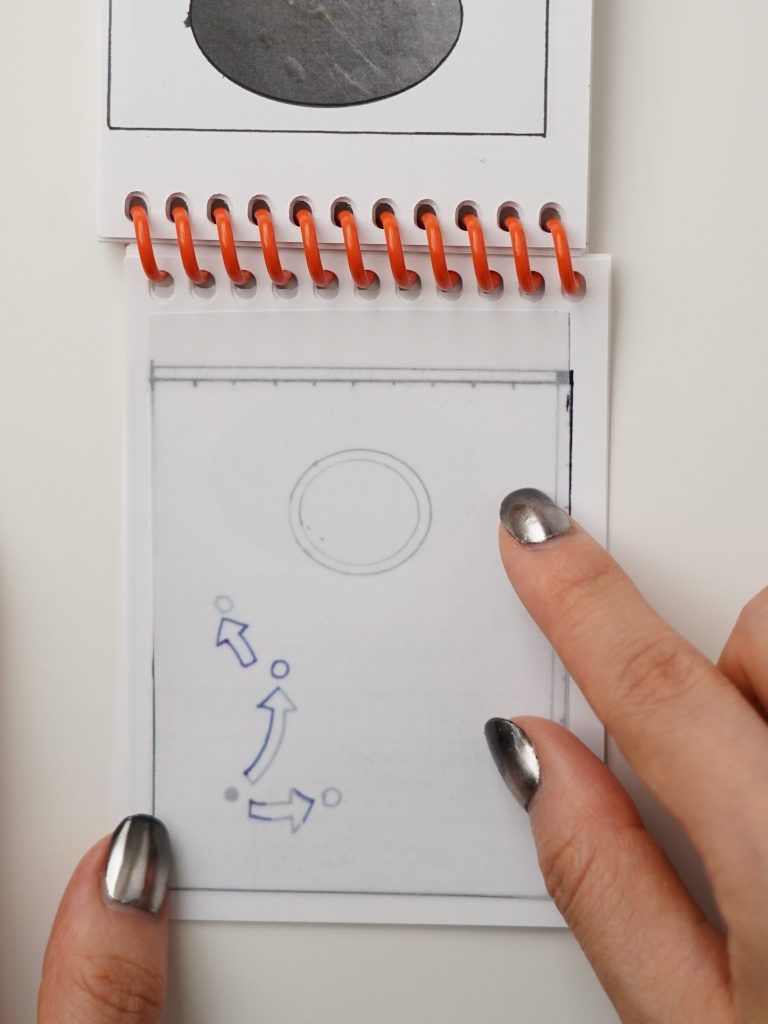
    So I simplified the text in the archival records, removing some of the descriptive language. Instead, I introduced small physical interactions, such as tearing, folding and drawing, allowing readers to experience the movement patterns of the residues through their own actions. Finally, at the end of each group, I included an explanation of the behaviours within that category.
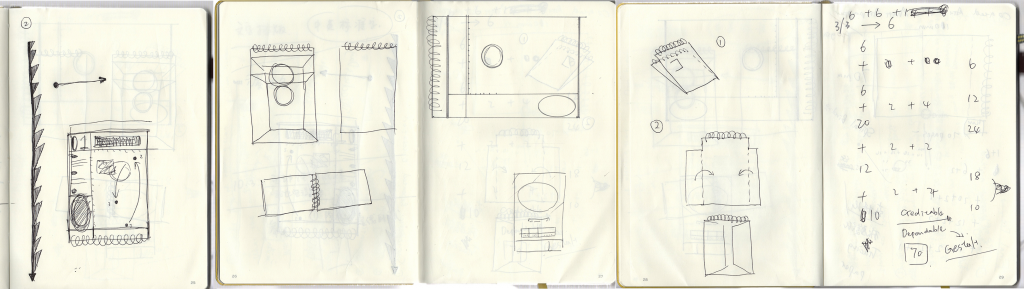
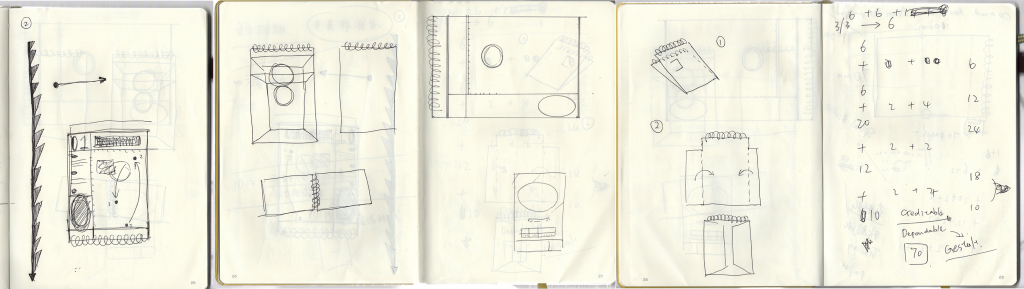
    Sketch 1
    Sketch 2

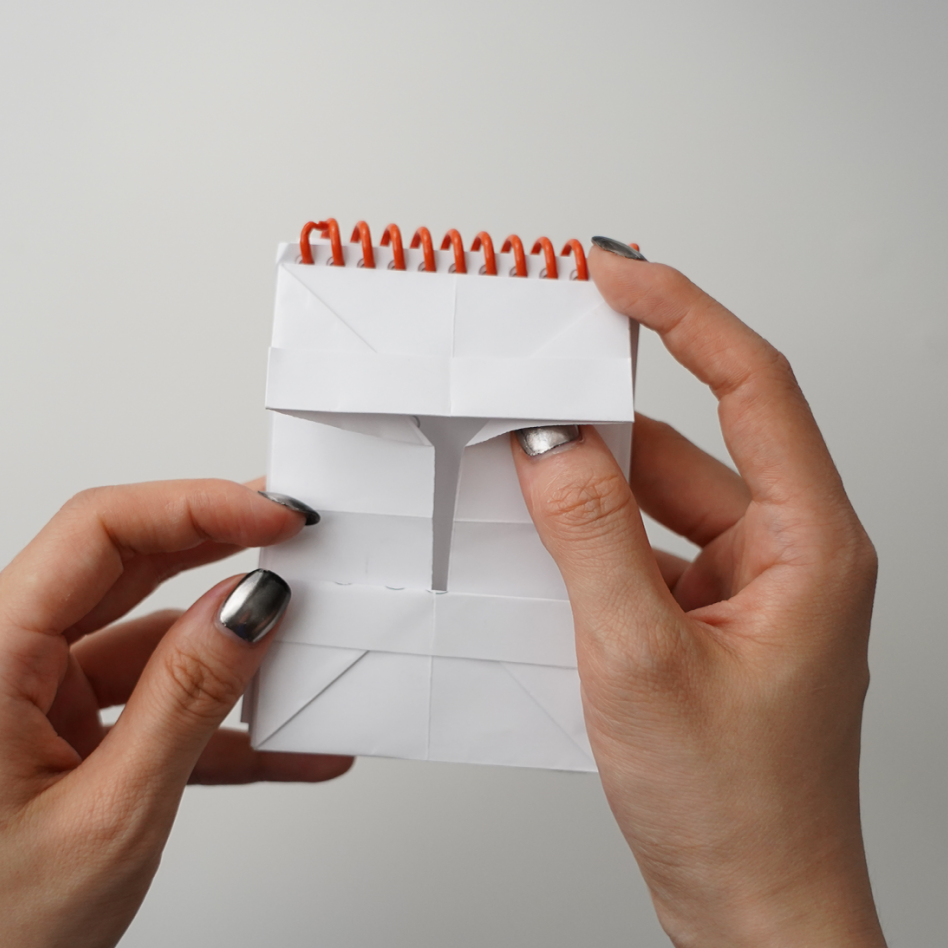
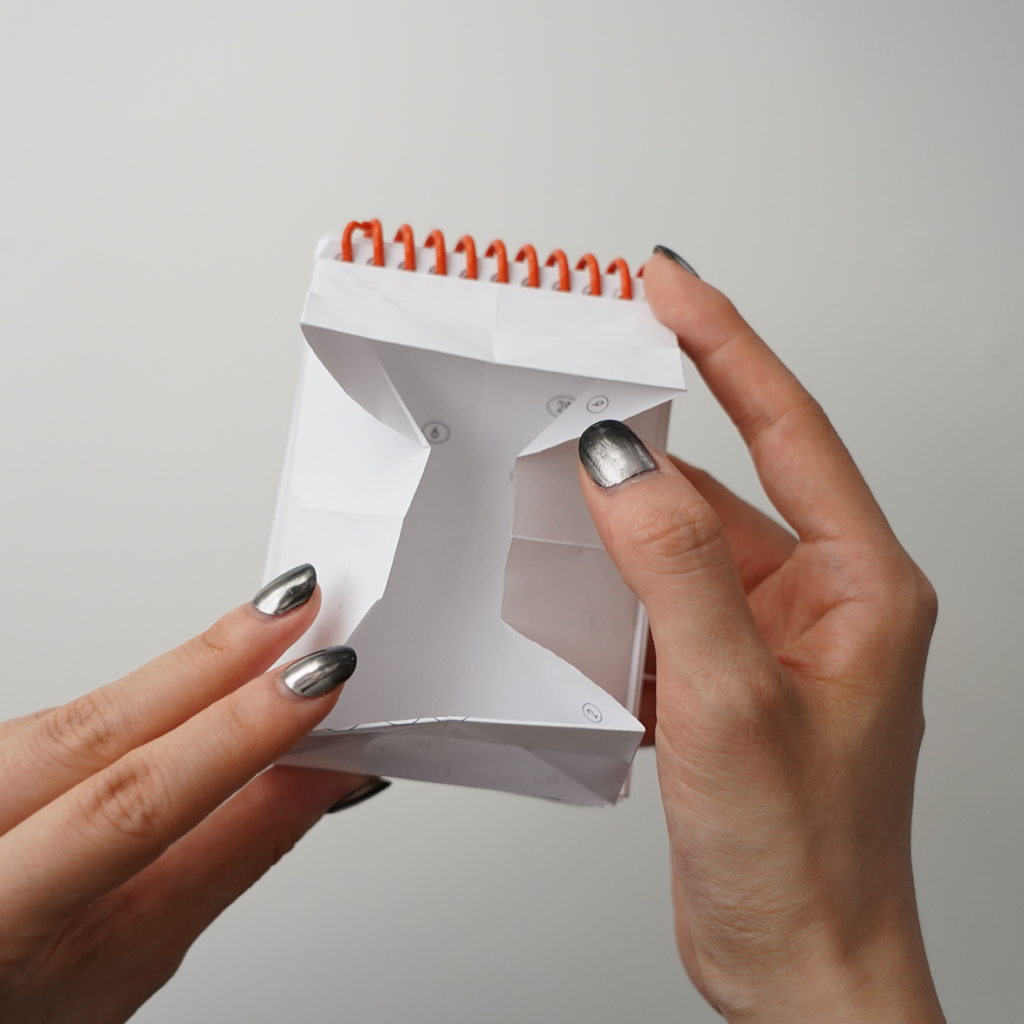
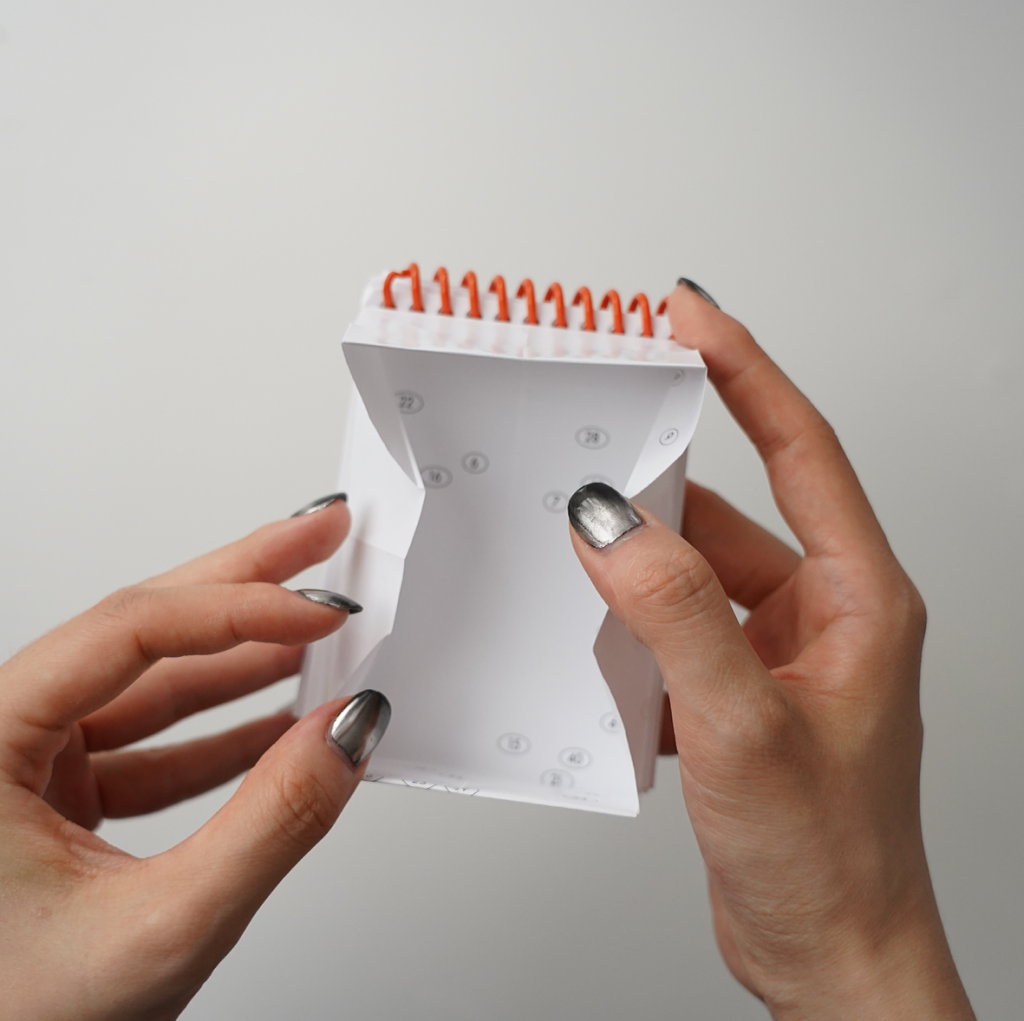
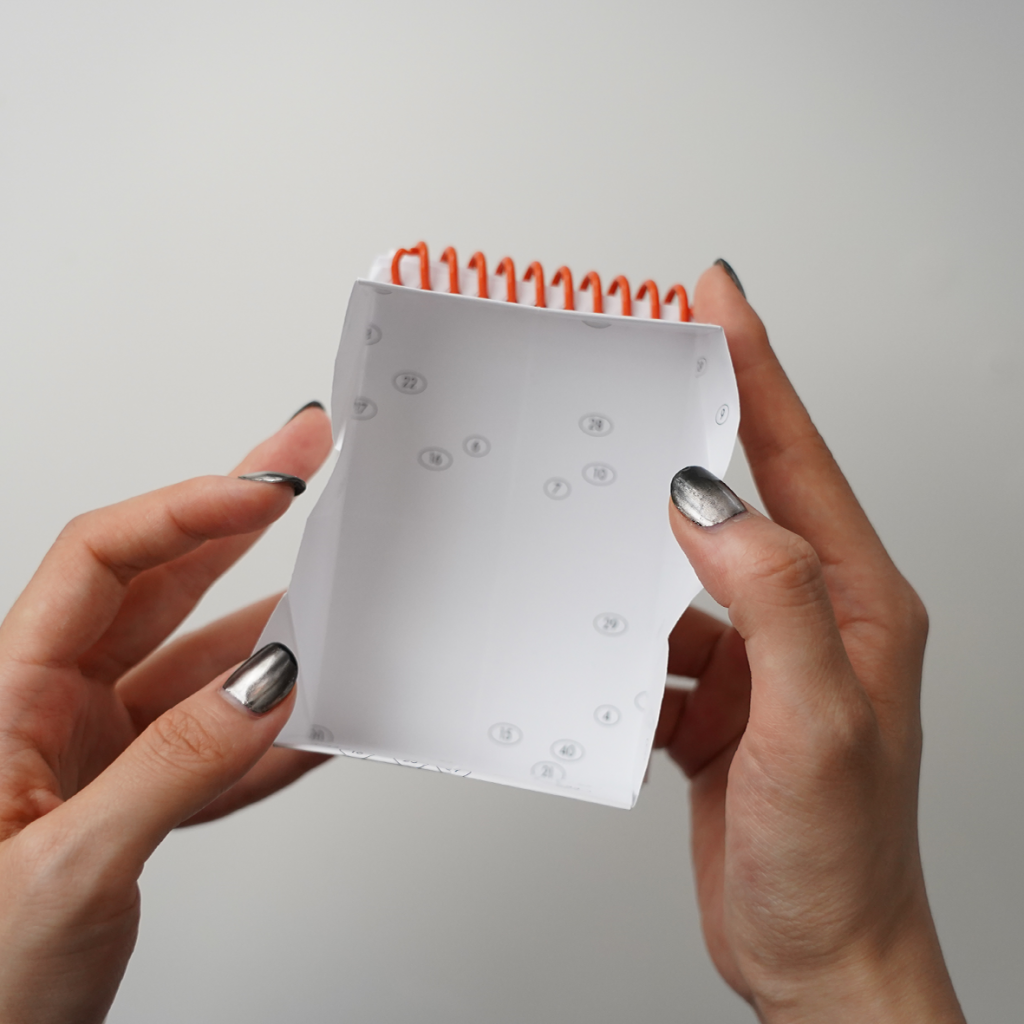
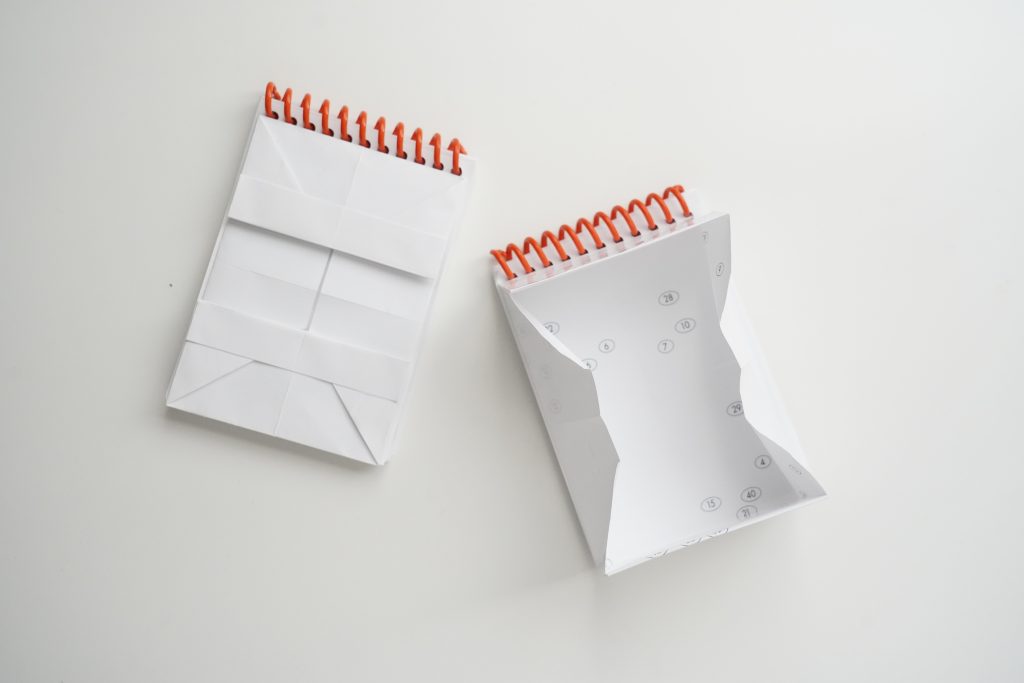
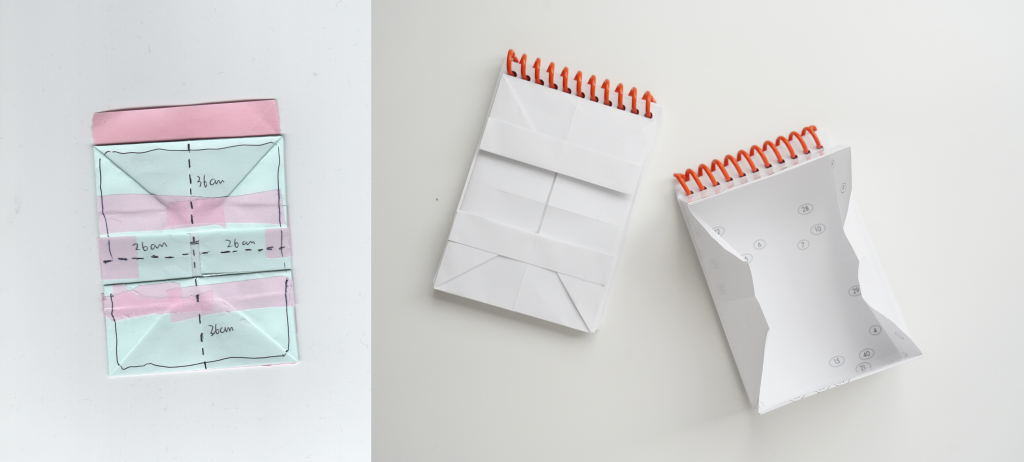
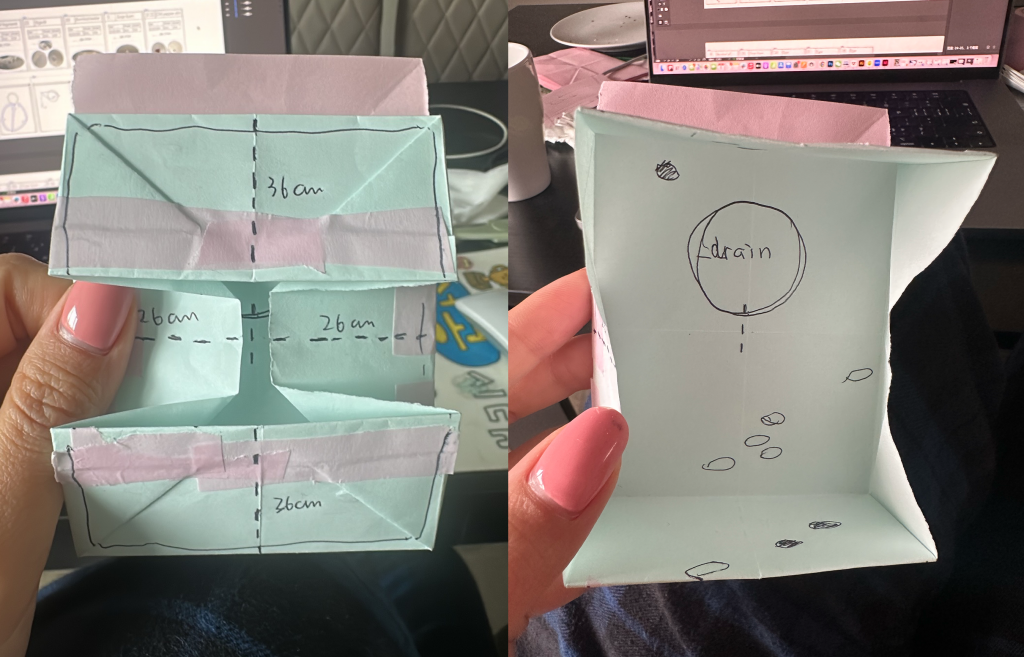
    I wanted to give readers a sense of the sink as a three-dimensional space. So I designed the cover using paper folding to mimic the shape of the sink, and positioned each residue’s number according to where it was found.
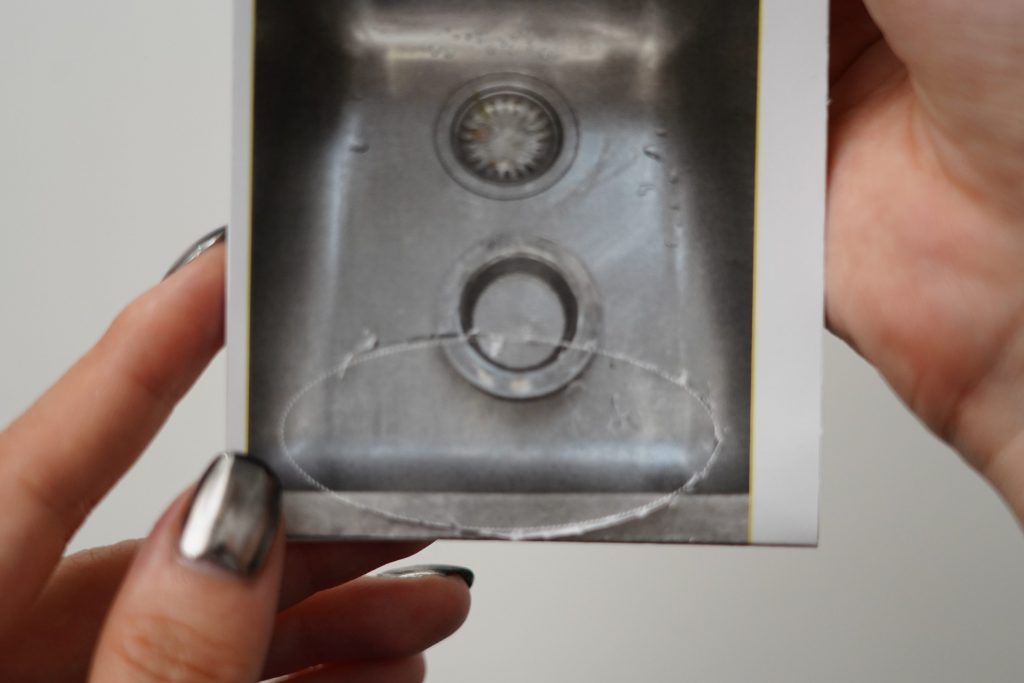
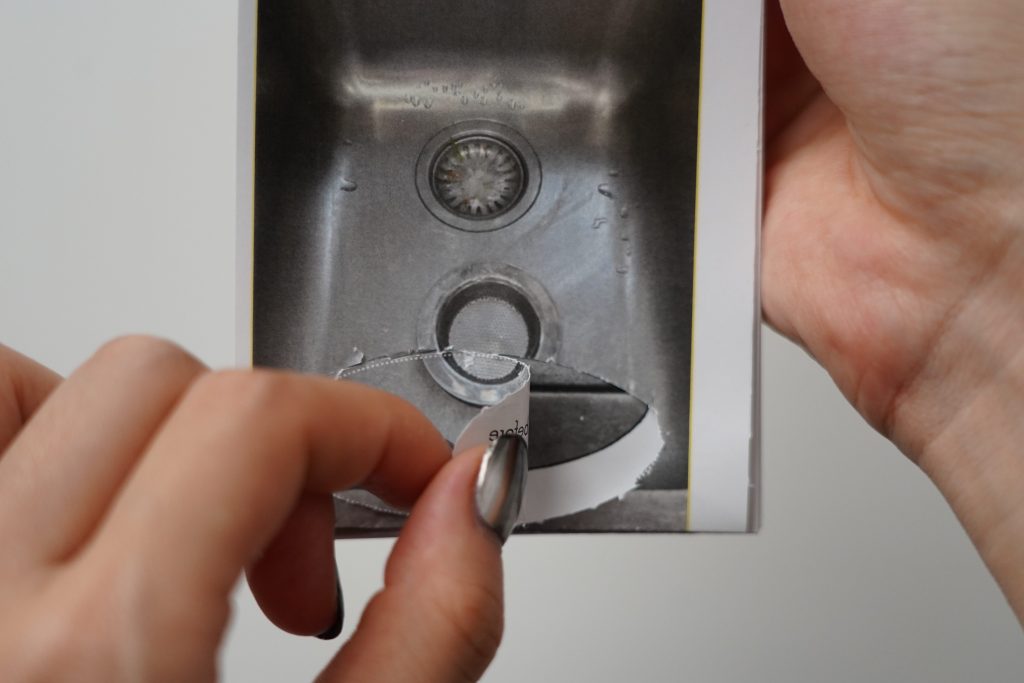
    Explanation page
  • Brief 1 WRITTEN RESPONSE☆

    Brief 1 WRITTEN RESPONSE☆

    In Brief 1, I chose the kitchen sink in my flat as my site of observation. The Gleaners and I (Varda, 2000) made me think about things that are often overlooked in everyday life. During the work of first week, I continuously observed the residues left in the sink after each time washing, and I tried to recording their positions, duration, and movement.

    This film encouraged me to think what is worthy of attention. Maybe “Gleaning” is not simply about collecting discarded objects, but also a way to look again at things which were considered insignificant or without value.

    I think my documentation of residues is also a kind of way of “gleaning”. Rather than collecting the residues themselves, I collected traces of their appearance, movement, and disappearance. Through this process, residues shifted from waste into subjects worthy of sustained observation.

    During the second week’s tutorial, Can ( my tutor) recommended The Carrier Bag Theory of Fiction (Le Guin, 1989) to me. Le Guin‘s idea of the “carrier bag” encouraged me to reconsider how to organize my observations and hold multiple residues and relationships.

    Throughout the process, as over 40 observations accumulated, I noticed that residues of different materials often shared similar behaviours, such as hiding, returning (doubling-back), dispersing, reuniting, or moving with water (parasiting). This led me to question whether the archive needed to follow a linear chronology. Instead, I began organising it through relationships between behaviours.

    Though my zine still includes categories and explanations, I attempted to shift the archive from a linear record towards a narrative space that could hold different individuals, behaviours, and relationships simultaneously.

    Meanwhile, staging or worldbuilding, as my methods of investigation, encouraged me to consider how observations could be presented and experienced. Through tearing, drawing, folding and layering tracing paper, I wanted readers to encounter those different residues’ behavior before explanations, allowing them to experience part of the observational process themselves.
    HORG’s(n.d.) pseudo-taxonomic study of bread clips also influenced my form of writing. Their serious, almost scientific descriptions of non-living objects inspired me to write about residues in a tone somewhere between field notes and speculative taxonomy.

    Finally, these investigations changed how I understood the sink itself. Rather than simply a functional space for cleaning and removing waste, I began to see it as a relational space shaped by the interactions between water, surfaces, the drain, human actions, and the most important one—residues!

    Holotypic Occlupanid Research Group (HORG) (n.d.) Holotypic Occlupanid Research Group: Taxonomic data of the breadties of the world. Available at: https://www.horg.com/ (Accessed: 12 October 2026).

    Le Guin, U.K. (1989) ‘The Carrier Bag Theory of Fiction’, in Dancing at the Edge of the World: Thoughts on Words, Women, Places. New York: Grove Press, pp. 165–170.

    Varda, A. (2000) The Gleaners and I [Film]. France: Ciné-Tamaris.

  • Brief  1 Kitchen Sink~ Week 1

    Brief 1 Kitchen Sink~ Week 1

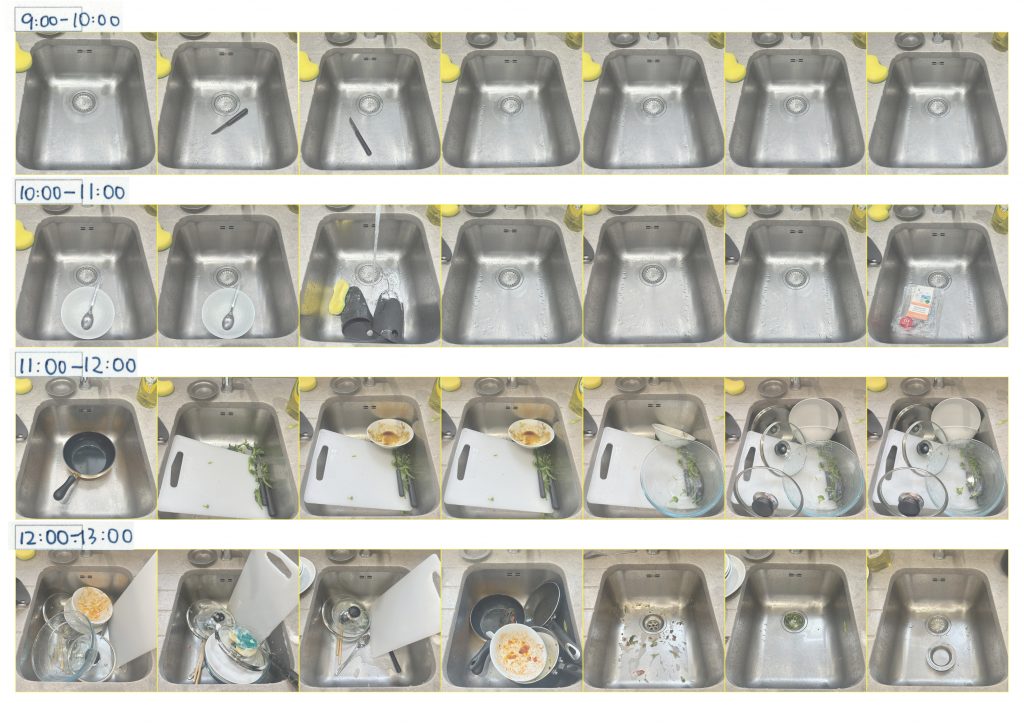
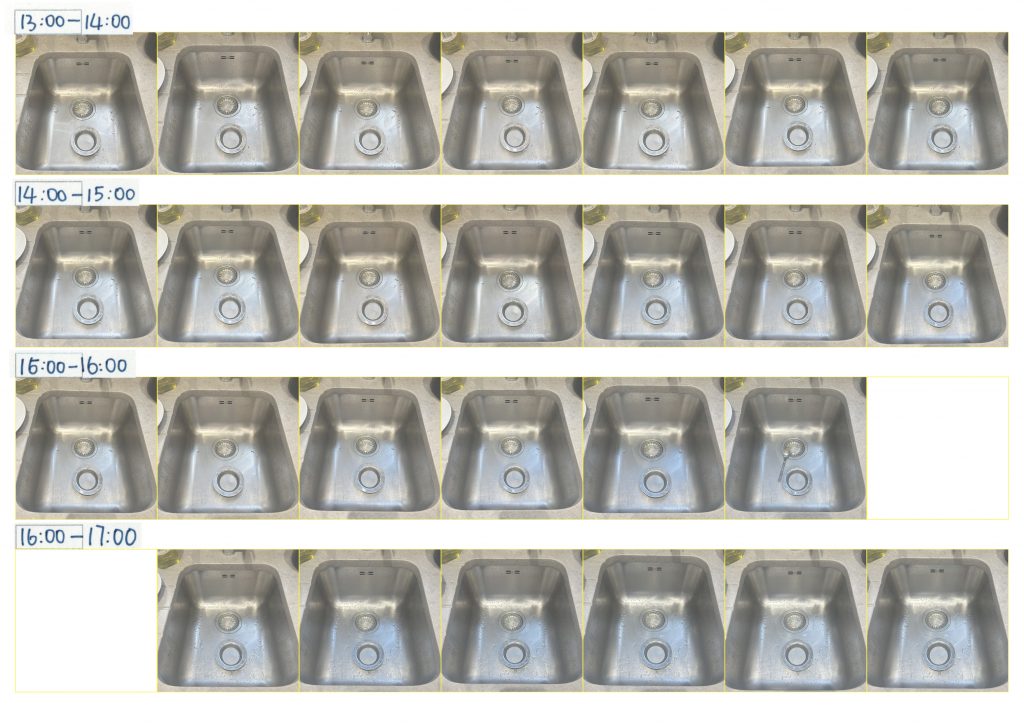
    In the first week, (◎_◎;) I used three different methods to observe my kitchen sink.

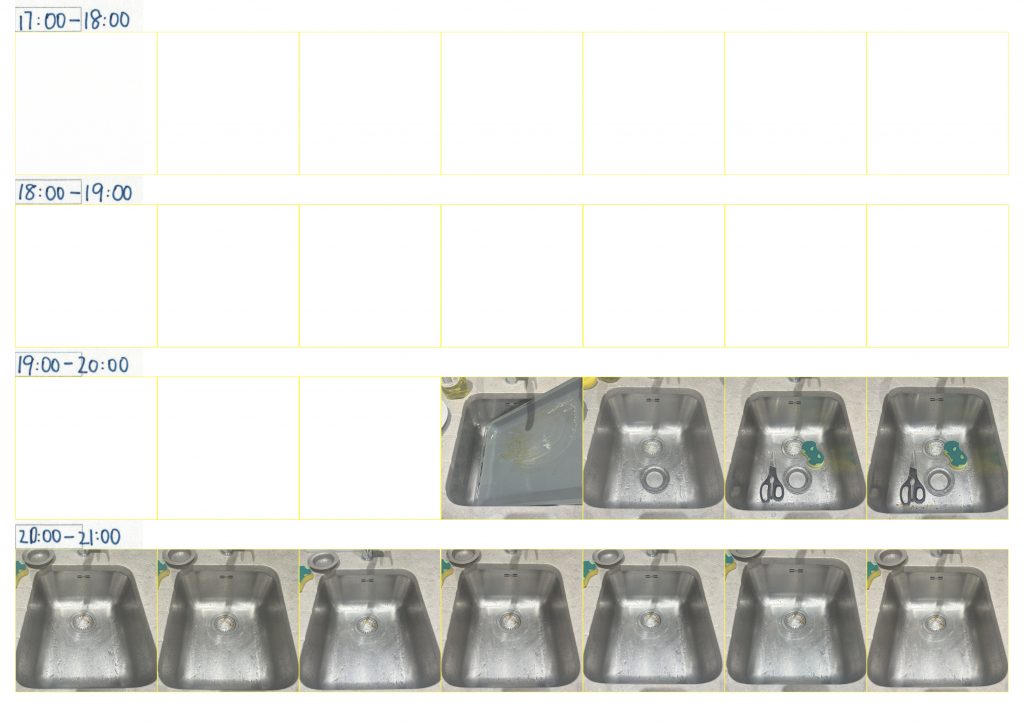
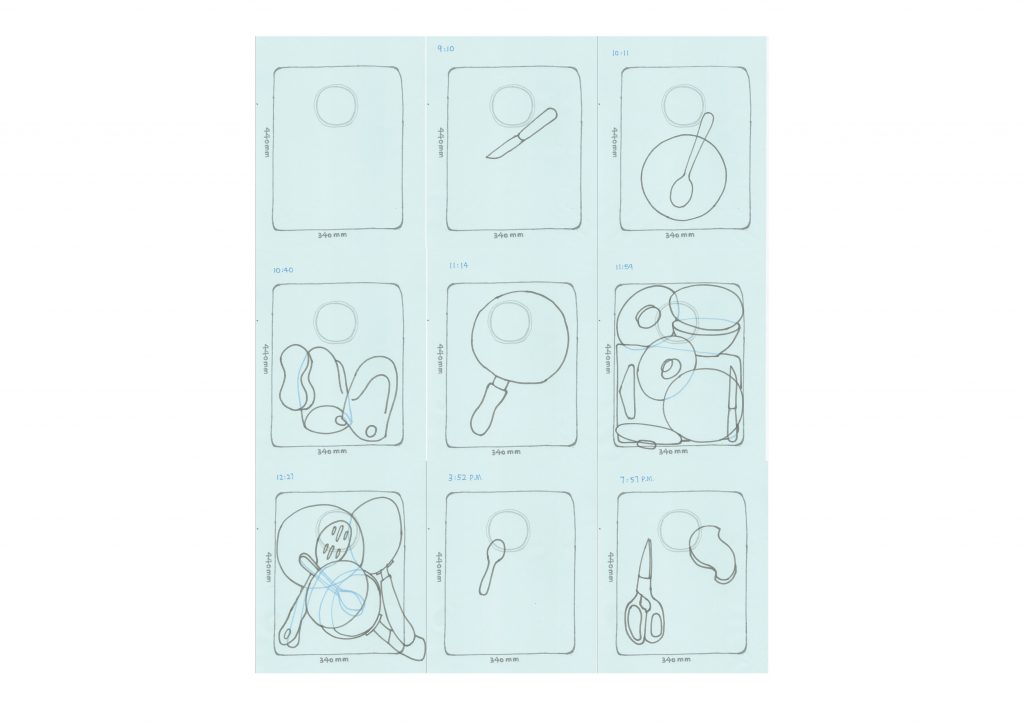
    Method 1 *Photographying〖Every 10 minutes picture〗

    Method 2 *Archiving〖Residues in the sink〗

    Method 3 *Sketching〖Residues in the sink〗